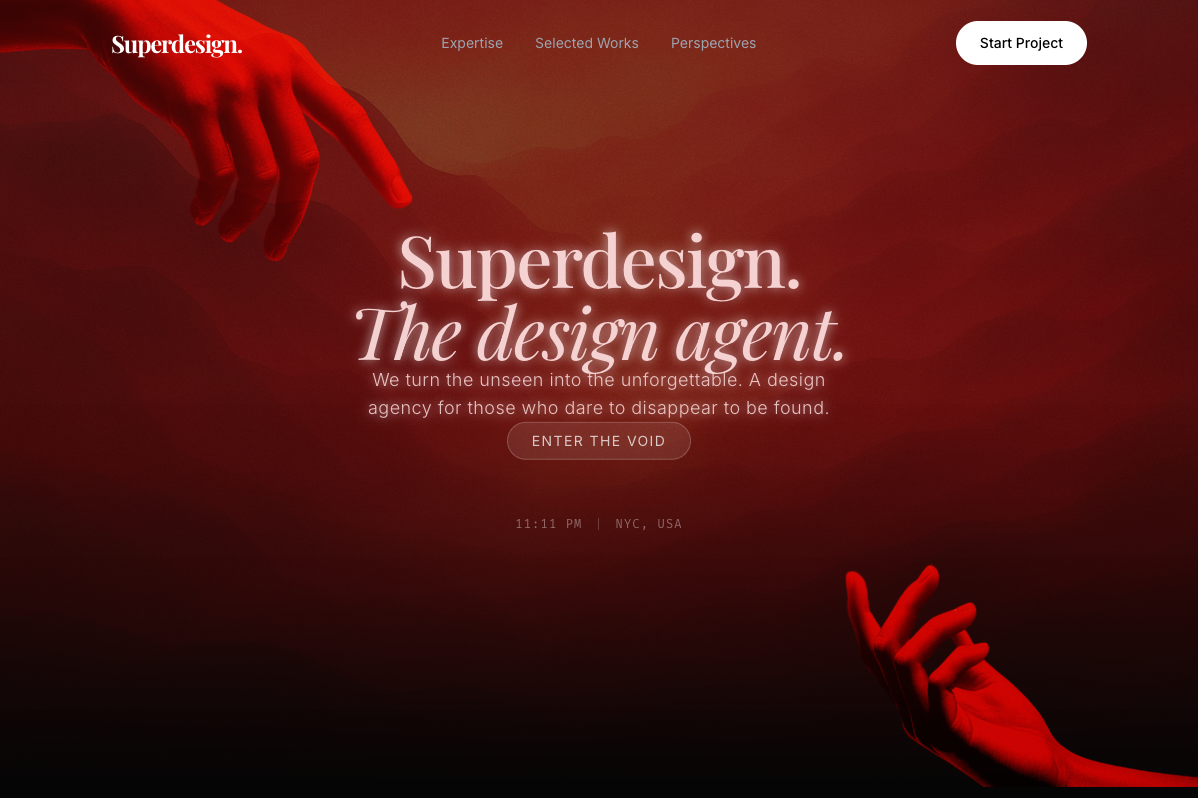
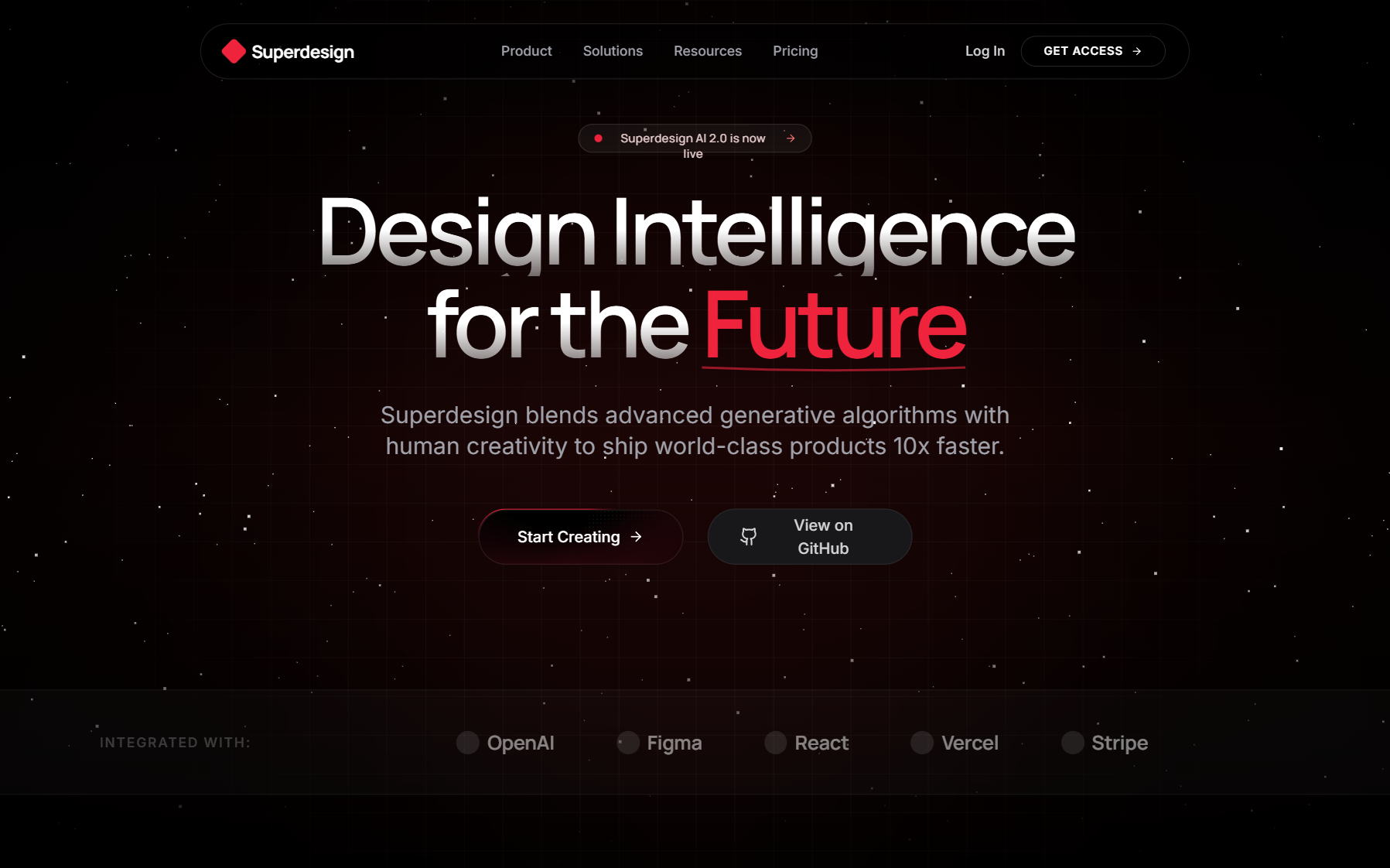
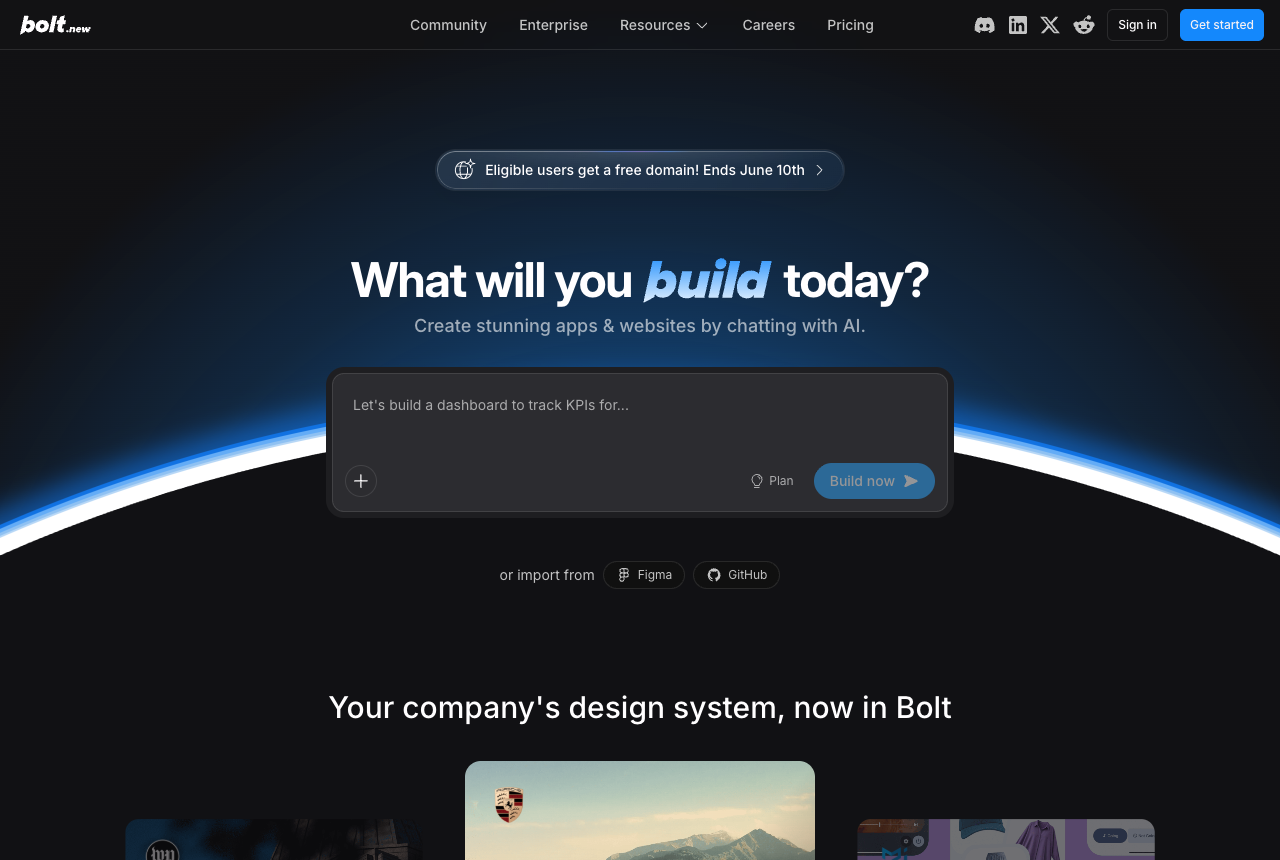
If you are searching for a Bolt alternative, the first question is not "which tool," it is "which job." Bolt (bolt.new, by StackBlitz) generates a whole runnable full-stack app from a prompt in a browser sandbox, and the reasons people leave are well documented: token bills that spike during debug loops, whole-file regeneration that drifts as projects grow, and a sealed sandbox that cannot work inside a codebase you already have. If you want the same job done differently, the real alternatives are Lovable, v0, and Replit. But if what you actually used Bolt for was the UI, or you have an existing repo Bolt cannot touch, the fix is a design agent: Superdesign forks several design directions at once on an infinite canvas, runs as a skill inside Claude Code or Cursor, and hands back real React and Tailwind on flat pricing.
Most "Bolt alternative" lists skip that split entirely and rank twelve more app builders. This guide names both lanes honestly, sources the complaints, and tells you when staying on Bolt is the right call.

What is the best Bolt alternative in 2026?
The best Bolt alternative depends on why you are leaving. If you want another prompt-to-full-stack-app builder, Lovable is the closest like-for-like swap and Replit adds hosting and a cloud IDE around the same idea. If you mostly used Bolt for frontend, v0 is the strongest pure React generator. If you want to finish real apps with control, Cursor is where most exported projects end up. And if the part you cared about was designing the UI, or you need to work inside an existing codebase, Superdesign is the design-first alternative the listicles miss.
| Tool | What it is | Works in your existing codebase | Pricing model | Best for |
|---|---|---|---|---|
| Superdesign | Design agent for UI | Yes (skill in Claude Code, Cursor) | Free + flat $20/mo Pro | UI design and iteration on real code |
| Bolt | Full-stack app builder | No, greenfield sandbox | Free + metered tokens | Fast prototypes from zero |
| Lovable | Full-stack app builder | No, greenfield | Free + metered credits | Non-engineers shipping an MVP |
| v0 by Vercel | Prompt-to-React UI | No, browser only | Free + usage-based credits | Greenfield React on the Vercel stack |
| Replit | Cloud IDE + AI agent | Partly (its own workspace) | Free + usage-based agent billing | Build and host in one place |
| Cursor | AI code editor | Yes (it is your editor) | Flat + usage tiers | Finishing and maintaining real apps |
Why are people leaving Bolt.new?
The complaints cluster around one root cause: Bolt regenerates whole files in a metered-token sandbox, so iteration is exactly what costs you. Bolt is genuinely fast at standing up a runnable full-stack prototype, and that part still earns praise. The exits come from three sourced patterns.
Token burn on debug loops. A June 2026 hands-on review burned about 1 million tokens building version 1.0 of a simple scheduling app, then "more than 5 million tokens and a few hours" debugging authentication. That matches the p0stman teardown, which calls auth "notoriously problematic" and estimates "authentication bugs alone can consume 3-8 million tokens as the AI repeatedly fails to fix them," and the long-running GitHub thread on token-burning loops where fixes fail, re-fail, and drain the balance either way. The same review notes Bolt's Trustpilot profile sits at 1.4 out of 5, while fairly adding that many low reviews come from non-developers expecting a finished product.
Projects degrade as they grow. Per the p0stman teardown, "projects with 15-20+ components experience severe context loss. The AI forgets patterns, creates duplicates, and loses consistency as projects grow." In a hands-on October 2025 build, the reviewer found the AI "generated code it knew was faulty" and needed real manual debugging, even while calling the Supabase integration "unbelievably fast."
It cannot work inside your codebase. Bolt builds greenfield projects in its own browser sandbox. The "I already have an app and I want to change the UI" workflow, which is most of real product work, is structurally out of scope. Even app-builder roundups like Superblocks' alternatives list name the same three pain points: scalability limits, token pricing that burns budgets, and the need for real coding skills to debug the output.
Do you need another app builder, or a design agent?
Be honest about which complaint sent you here, because the two lanes do not overlap. "Bolt alternative" hides two different searches:
- "Build my whole app from a prompt, but better." You want another app generator. Lovable, Replit, and v0 are the real candidates, and the trade-offs between them are about polish, hosting, and stack, not category. Note that all of them meter usage the way Bolt does, so the token-burn problem changes shape rather than disappearing.
- "I used Bolt to get UI on the screen, and the meter punished every iteration." That is a design problem wearing an app-builder costume. The fix is not a thirteenth app generator, it is a design agent that treats exploration as the whole point: many directions at once, on a canvas, in code you own, without per-attempt billing.
The second lane is the one no roundup covers, and it is exactly where Superdesign sits. It does not rebuild Bolt's full-stack scope, and it does not try to. It takes the design layer, the part where metered regeneration hurts most, and does it properly.
How is Superdesign a Bolt alternative if it does not build the backend?
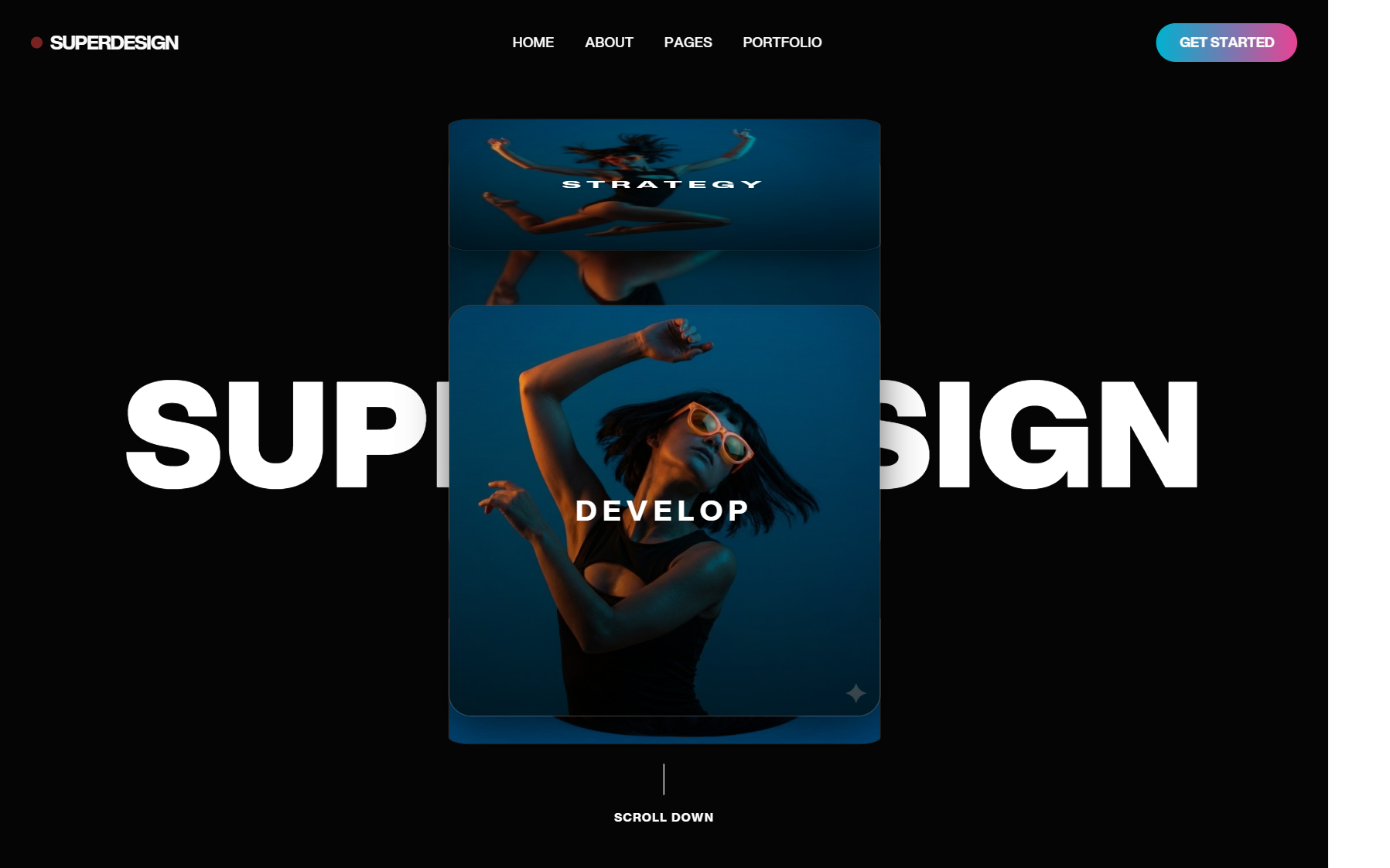
Superdesign replaces the part of Bolt most people actually iterate on, the UI, and skips the part you only do once, the scaffold. It is an AI product design agent: prompt it in plain English and it generates mockups, components, and whole multi-screen flows on an infinite canvas, then outputs real React, Tailwind, and CSS. Three things make it the design-first pick rather than a smaller Bolt.
It explores in parallel instead of regenerating one thread. Bolt iterates a single app, one prompt at a time, and every detour costs tokens. Superdesign forks several full design directions at once on the canvas, carries context across the branches, and lets you compare whole flows side by side before committing. For design work, where the throwaway attempts are the method, this is the structural difference.
It runs inside the coding agent you already use. One line installs it as a skill (npx skills add superdesigndev/superdesign-skill), then /superdesign plus a plain request hands the visual work over. On an existing project it reads your real UI first and writes a design-system file, so new screens match what you ship instead of starting from a generic default. Bolt has no path into your repo at all. The full head-to-head, including the free Chrome Component Grab that lifts any live web component into clean Tailwind, lives in Bolt vs Superdesign.
It bills flat, with a free prompt library on top. Superdesign is a free tier plus a flat $20/month Pro plan, so a heavy exploration day costs the same as a light one. The free community prompt library, one of the largest around, covers styles, animations, and components and works with any coding agent, so you are not spending tokens to discover what a good prompt looks like.
The honest limit: Superdesign will not stand up your database, auth, or hosting. If you need a running full-stack app from one prompt, it is the wrong layer, and the app builders below are the real comparison.
Which app builders actually replace Bolt?
If you want Bolt's job done by someone else, three tools genuinely compete, and one editor catches the overflow. A fair note on each:
- Lovable is the closest like-for-like alternative: prompt to full-stack app with a polished, beginner-friendly flow and deep Supabase integration. It shares Bolt's structural traits, metered credits, greenfield-only, and a documented pattern of stalling near the end of real apps. The narrow head-to-head is in Lovable vs Bolt, and the wider escape routes in the Lovable alternative guide.
- v0 (by Vercel) is the strongest choice if Bolt was mostly your frontend generator: clean React, Tailwind, and shadcn/ui output with GitHub sync and one-click deploy. It is browser-only, credit-metered, and unaware of your codebase, and its 2025 usage-based revamp triggered its own cost backlash, covered in the v0 alternative guide.
- Replit wraps an AI agent in a full cloud IDE with hosting, so you can build, run, and deploy in one place. The agent work is usage-billed, and you are adopting Replit's workspace rather than your own local setup, but for "one tab that does everything" it is the most complete of the three.
- Cursor is not an app builder, it is the AI editor where Bolt projects tend to end up once the sandbox stops being enough. If your honest workflow is "generate, export, finish in the IDE," starting in the IDE saves the round trip, which is the argument we make in Cursor for design.
The pattern worth noticing: every app builder on this list meters usage. Switching builders changes the meter's shape, not its existence. Only the editor and the design agent bill flat.
When should you stay on Bolt?
Stay on Bolt if you are starting from zero, you want a deployed, runnable prototype today, and you will treat the output as a draft. For hackathons, demos, pressure-testing an idea, or a non-developer shipping something functional without a terminal, Bolt's prompt-to-running-app speed is still the best version of that trick, and the free tier (1 million tokens a month, per the June 2026 review) is enough to feel it out. The fair reading of the criticism is the p0stman line that Bolt gets you about 70 percent of the way and the last 30 percent is professional development: that is a great deal next to a blank repo, as long as nobody mistakes the prototype for the product.
Leave when your project crosses the size where context loss kicks in, when the token meter makes you hesitate to iterate, or when the work moves inside a codebase Bolt cannot see. Those are not Bolt being bad at its job, they are the edges of the job it was built for.
Can a Bolt alternative work inside my existing codebase?
The app builders cannot, and this is the cleanest way to pick your lane. Bolt, Lovable, and v0 all generate greenfield projects with no awareness of the repo you already maintain, your components, your tokens, or your conventions. Cursor works in your repo because it is your editor, but it has no design surface: no canvas, no side-by-side variants, no pre-code exploration.
Superdesign is the option built for exactly this gap. Invoked from your coding agent, it investigates your current UI first, writes a design-system file (the practical analog of a DESIGN.md), and designs in that context, so output matches the product you already ship. The deeper codebase-awareness argument, across the whole category, is the pillar in the best AI UI generator, and the 2026 AI design stack shows how a design agent and an app builder slot into the same toolchain rather than competing. A common pairing, covered in Bolt vs Superdesign, is to scaffold with an app builder once, then do all the ongoing UI work with the design agent inside your IDE.
The honest verdict
Bolt is good at its actual job: a runnable full-stack prototype from a prompt, faster than anything that came before it. The sourced reasons people leave, token burn on debug loops, degradation past 15 to 20 components, and the greenfield-only sandbox, are edges of that job, not failures of it. If you want the same job with different trade-offs, Lovable, v0, and Replit are the real candidates, and they all bring their own meters.
But if what you keep iterating on is the interface, or your work lives in a codebase no app builder can enter, the design-first lane is the alternative the listicles never name. Superdesign forks several directions at once on an infinite canvas, runs as a one-line skill in Claude Code or Cursor, pulls from a free prompt library, and hands back real React and Tailwind on a flat plan. Try it free, and if you get stuck wiring the skill into your agent, ping me and we'll sort it together. 🙂