Two tools keep coming up when developers and founders talk about AI-powered UI generation in 2026: Bolt.new and Superdesign. They both promise to take you from prompt to polished interface faster than any traditional workflow. But they're solving different problems for different people, and choosing the wrong one will slow you down.
This is an honest, side-by-side breakdown. We'll cover what each tool does well, where each one falls short, and which one you should reach for depending on your workflow.

What is Bolt.new?
Bolt.new is a browser-based AI app builder from StackBlitz. You describe the app you want, a SaaS dashboard, a landing page, a CRUD tool, and Bolt generates the full-stack code, runs it in a live preview, and lets you iterate via natural language. It supports React, Vue, Svelte, and more, and handles both frontend and backend.
Bolt is designed for rapid prototyping and full app generation. Its target user is someone who wants to go from idea to working web app as fast as possible, without thinking about design systems or component libraries.
Best for: Founders and developers who want a complete web app generated quickly. Think of it as "vibe coding" for full-stack apps.
What is Superdesign?
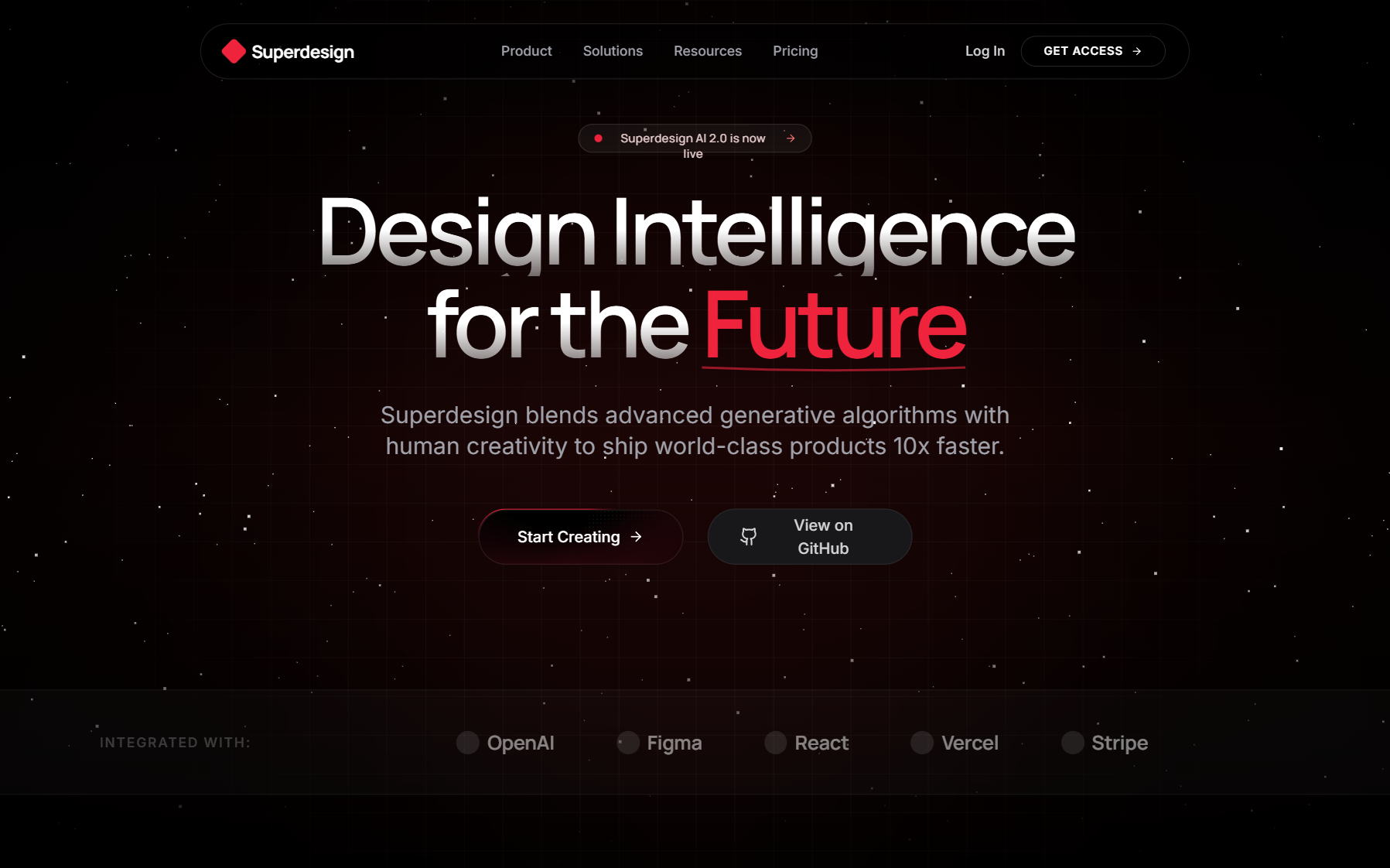
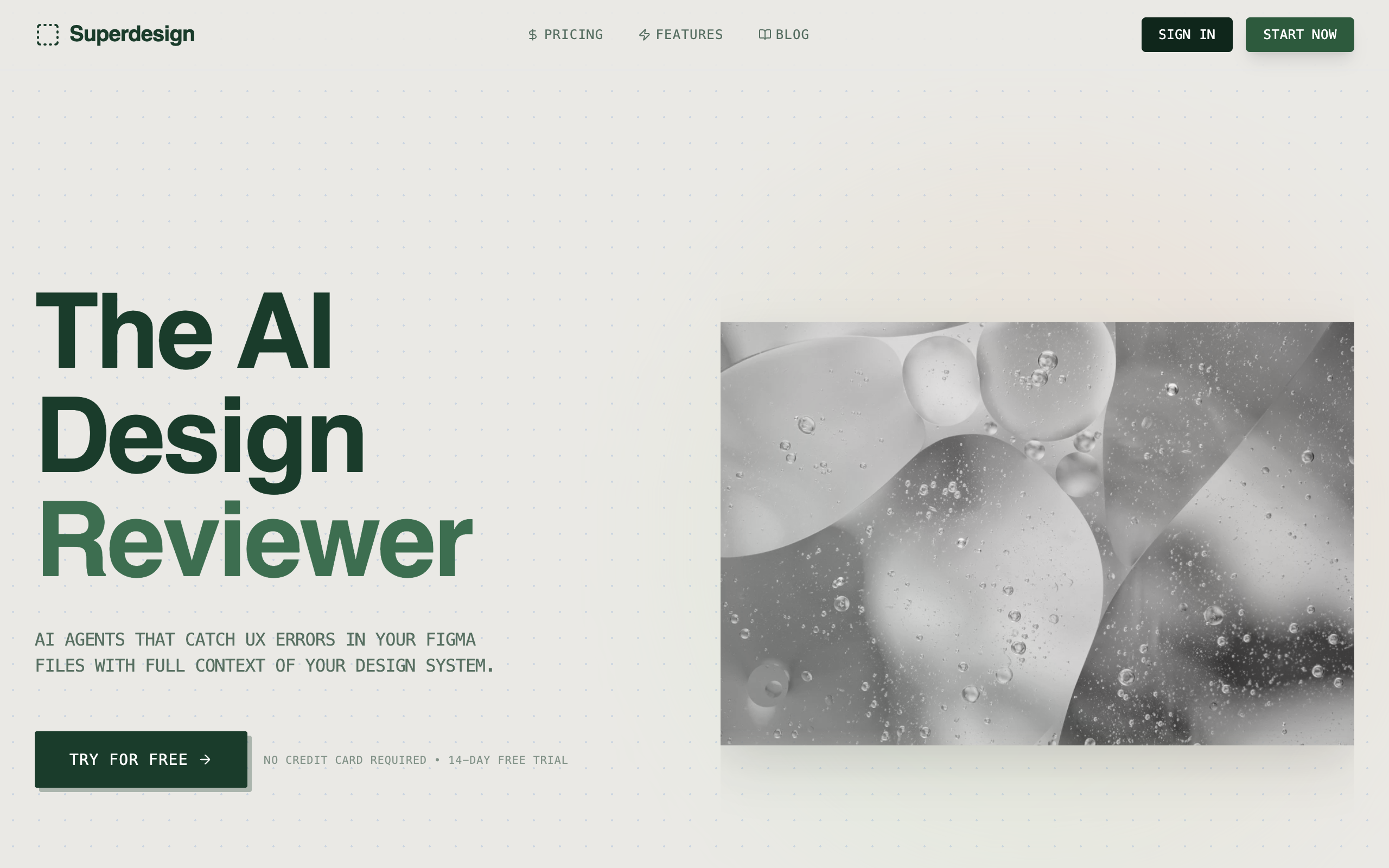
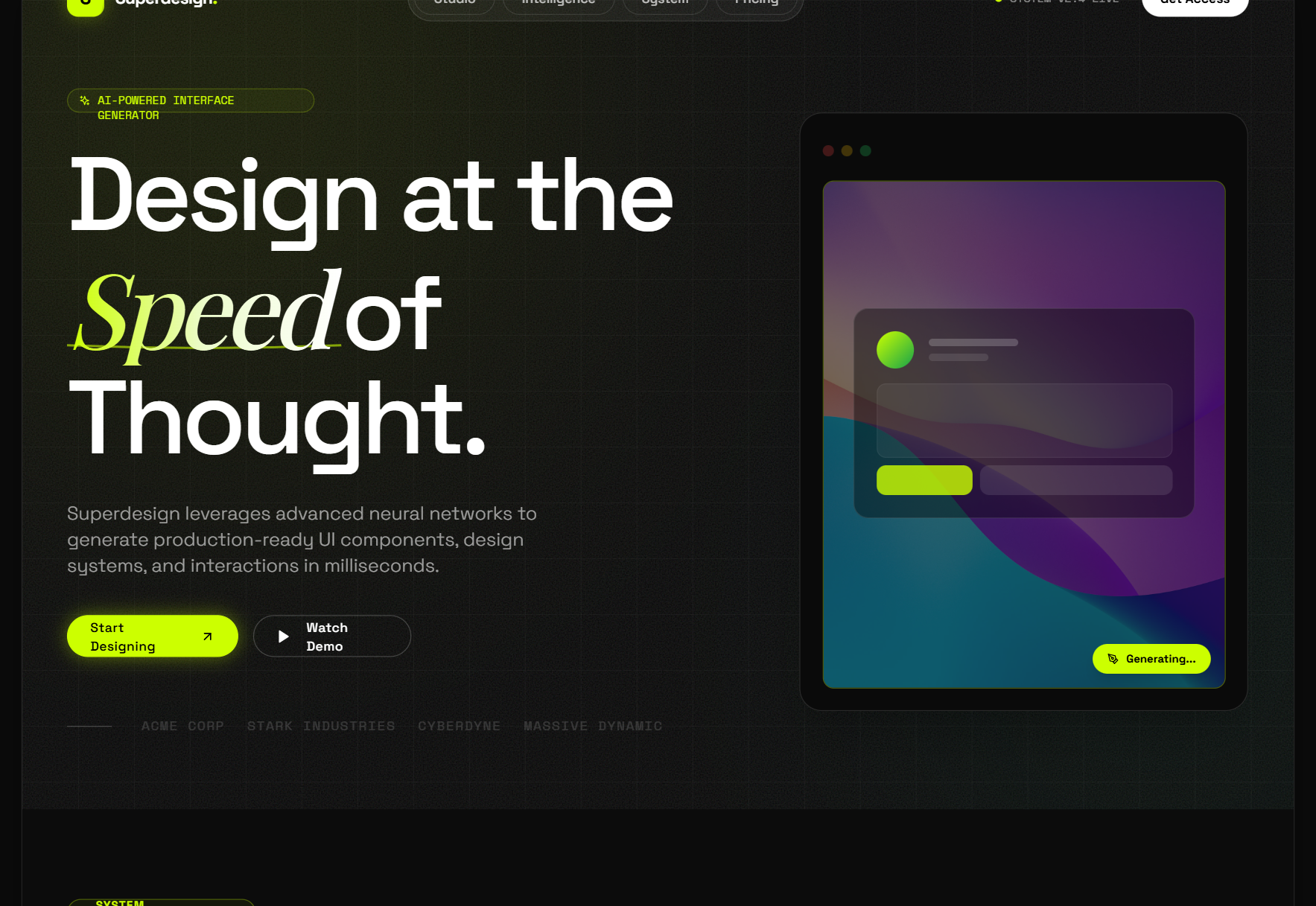
Superdesign is an AI design agent that lives inside your IDE, Cursor, Windsurf, VS Code, Claude Code. Instead of a browser-based sandbox, Superdesign integrates directly into your existing development environment. You describe the UI you want, and Superdesign generates production-ready components, design systems, and UI variants, all within the context of your actual codebase.
Superdesign is also open source, which means you can inspect it, extend it, and use it without a subscription wall blocking your workflow.
Best for: Developers and product teams who are already building inside an IDE and want design generation as a native part of that workflow, not a separate browser tab.
Bolt vs Superdesign: head-to-head comparison
1. Where you work
This is the biggest architectural difference between the two tools.
Bolt.new runs entirely in the browser. Your code lives in a cloud sandbox powered by StackBlitz WebContainers. You never install anything locally. This is great for speed and zero-setup convenience, but it means you're context-switching every time you use it. Your real project is in your IDE; Bolt is in a different tab with its own file system.
Superdesign lives inside your IDE. It understands your actual project structure, your existing components, your file tree. When you generate a new UI component, it's in the right folder, importing from the right places, using your existing design tokens. There's no copy-paste step, no bridging the gap between Bolt's sandbox and your real codebase.
For solo hackathons or throwaway prototypes, Bolt's browser-based approach is perfect. For anything that will live inside a real codebase, Superdesign's IDE integration is a significant advantage.
2. Design quality and UI output
Bolt.new generates functional UIs, they look clean, professional, and are often good enough for an MVP. But Bolt is primarily a code generator that produces interfaces as a byproduct of building apps. Design quality is not its primary focus.
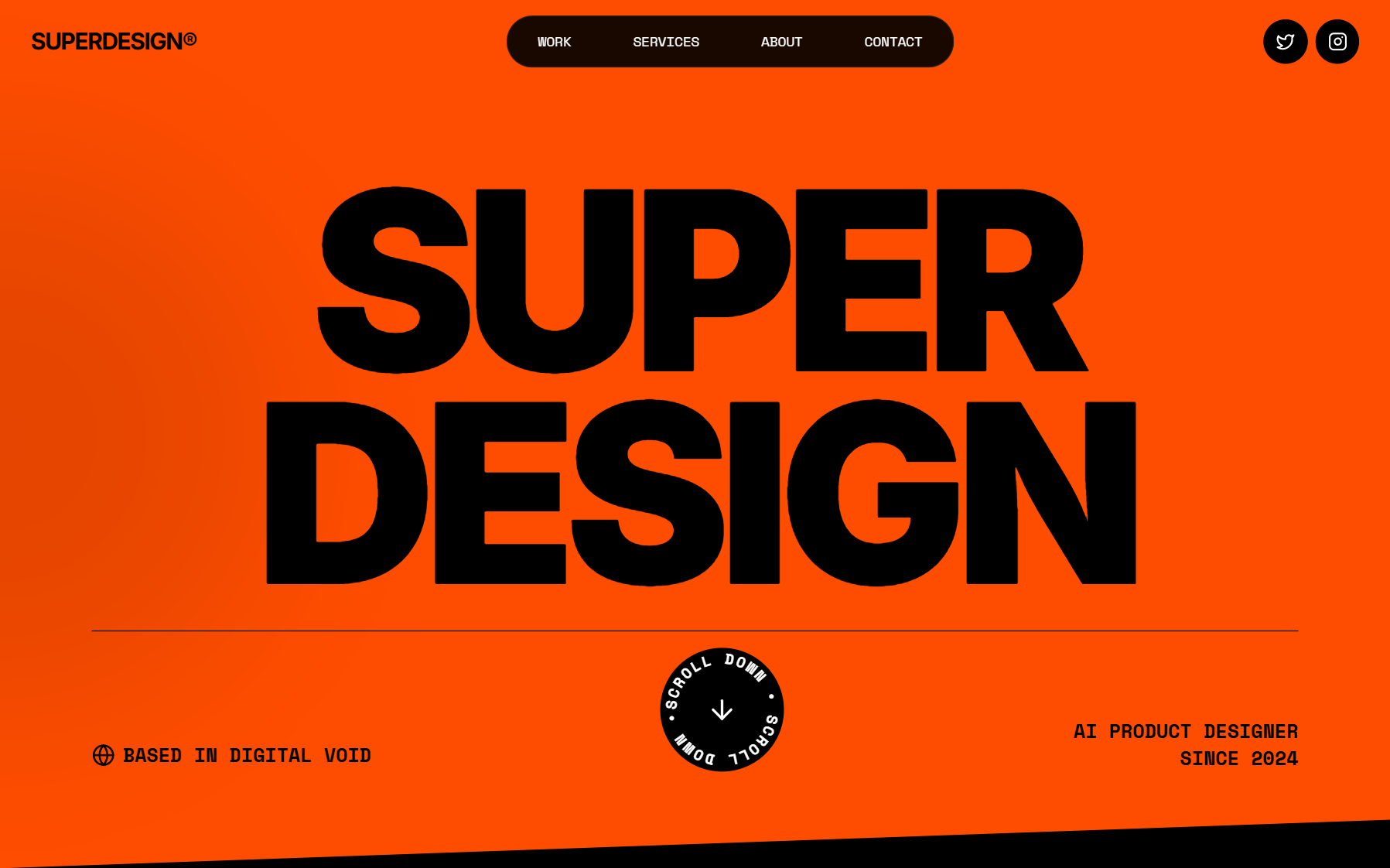
Superdesign is purpose-built for design output. It generates multiple UI variants for each prompt, lets you compare them side by side, and produces components with proper design system thinking, consistent spacing, typography, and interaction states. When your team cares about UI quality and consistency across screens, Superdesign's output is noticeably more intentional.
If you need a quick landing page that looks decent, Bolt is fine. If you're building a product where UI quality affects conversion or user trust, Superdesign is the better tool for deliberate design decisions.
3. Design systems and consistency
Bolt generates each app (or iteration) somewhat independently. If you use Bolt to prototype 10 features over a month, you might end up with slightly different button styles, different spacing conventions, and different color usages across those features. There's no enforced design system by default.
Superdesign supports DESIGN.md files, a design configuration standard that defines your typography, colors, spacing, and component conventions. Every generation respects these rules. If you update your design system token file, future generations automatically align to it. This is the difference between tools that create design debt and tools that accumulate design consistency.
4. Iteration and exploration
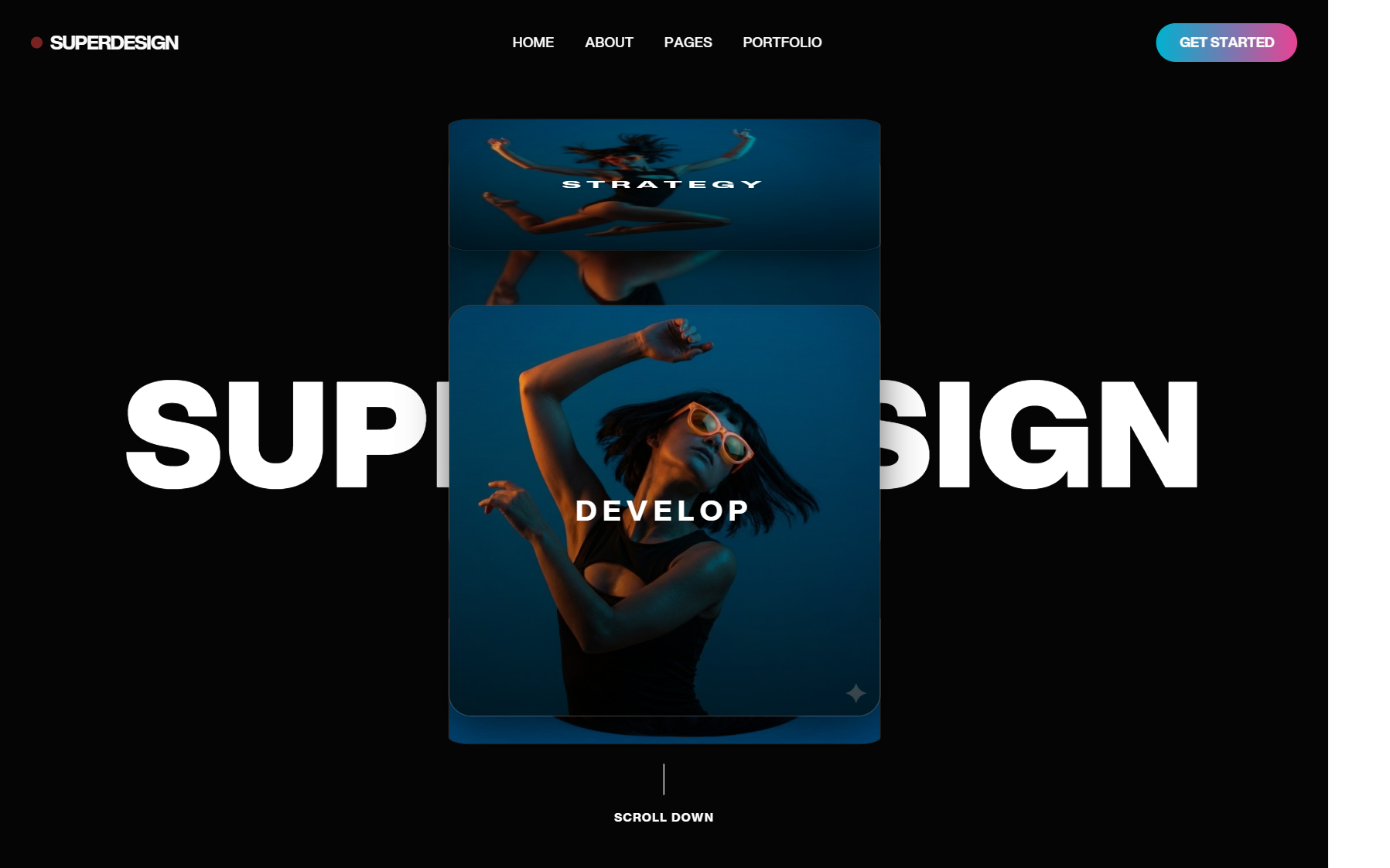
One of Superdesign's most powerful features is parallel variant generation. Ask for a dashboard component and you'll get three different layout interpretations, different information hierarchies, different visual approaches. You pick the direction you like and iterate from there.
Bolt generates one output per prompt. It's great at what it does, but it's a builder, not an explorer. If you're in the early stages of a product and need to explore what the UI could look like, Superdesign's variant generation saves hours compared to manually tweaking a single output.
5. Importing existing designs and code
Superdesign can import live webpages or UI screenshots and convert them into editable design files or clean code workspaces. This is powerful for cloning a reference design, refactoring an existing interface, or onboarding a new component into your design system.
Bolt can import projects via GitHub or file upload, but it's focused on generating new apps rather than refactoring or extending existing design systems.
6. Open source vs. closed platform
Bolt.new is a proprietary platform by StackBlitz. You use it through their service, their pricing, their token limits. If Bolt changes its pricing or goes down, your workflow is affected.
Superdesign is fully open source. The design agent code is on GitHub. You can run it locally, inspect how it works, contribute features, and use your own model API keys. For teams with security requirements or just a preference for transparency, open source is a meaningful differentiator.
7. Pricing
Bolt.new uses a token-based pricing model. The free tier is limited; heavy usage requires a paid plan. Costs can add up quickly if you're using it daily across a team.
Superdesign offers a free tier and paid plans, but the open source nature means you can also self-host and use your own API keys, potentially reducing costs significantly for high-volume usage.
When should you use Bolt.new?
Bolt is the right tool when:
- You're building a complete web app from scratch and want to skip the initial setup entirely
- You're prototyping for a demo or pitch and need something working fast, not something you'll maintain
- You don't have an existing codebase or IDE workflow, you want a self-contained sandbox
- You need backend generation too (databases, auth, APIs), not just UI
- You're a non-developer who wants to ship something functional without touching a terminal
When should you use Superdesign?
Superdesign is the right tool when:
- You're already building inside an IDE (Cursor, Windsurf, VS Code) and want design generation without leaving it
- You need UI quality and consistency across a product, not just something functional
- You want to explore multiple design directions before committing to one
- You're working with an existing codebase and need generated components to integrate cleanly
- You care about design system consistency and want to enforce it through DESIGN.md
- You prefer open source tooling with the option to self-host
The real question: full-stack builder or design agent?
Bolt.new and Superdesign aren't really competing for the same user. Bolt is a full-stack app builder. Superdesign is a design agent. The confusion comes from the fact that both can generate UI.
If you're starting a new project from zero and need an app, not just a UI, Bolt gets you to a working prototype faster than anything else.
If you're a developer or product team with an existing codebase and you want to move faster on the design layer without leaving your IDE, Superdesign is in a category of its own. It's the closest thing to having a skilled designer sitting next to you in your coding environment, generating variants and respecting your design system on every output.
The best teams in 2026 use both: Bolt for throwaway prototypes and early-stage exploration, Superdesign for production-ready UI generation inside their real codebase.
Summary: Bolt vs Superdesign at a glance
| Feature | Bolt.new | Superdesign |
|---|---|---|
| Where it runs | Browser sandbox | Inside your IDE |
| Primary focus | Full-stack app generation | UI design generation |
| Design quality | Good (functional) | Excellent (design-first) |
| Variant exploration | One output per prompt | Multiple variants per prompt |
| Design system support | Limited | Full (DESIGN.md) |
| Existing codebase fit | Moderate | Excellent (context-aware) |
| Open source | No | Yes |
| IDE integration | No | Cursor, Windsurf, VS Code |
| Best for | New apps from scratch | Design within existing projects |
Try Superdesign today
If you're a developer or product team that builds in an IDE, Superdesign is the fastest way to level up your design workflow without leaving your environment. Install the extension for Cursor, Windsurf, or VS Code and generate your first UI component in under a minute.