Short version: v0 is for generating clean React UI components you drop into a project you already own. Lovable is for going from a plain-English prompt to a whole working full-stack app (database, auth, hosting) without touching code. They sound like rivals, but they solve different problems, so the right pick is mostly about whether you need a component or an entire app. The catch nobody puts on the box: both bill by credits, and both can burn through them fast.
This is an honest, sourced breakdown, not a vendor self-rank. We'll resolve the real question quickly, then go deep on the two things every comparison page buries: what these tools actually cost when things go sideways, and whether the output is safe to ship. At the end, an honest note on a third path if you're a developer who already lives in a codebase.

What's the real difference between v0 and Lovable?
The one-line answer: v0 generates UI components and frontends; Lovable generates entire full-stack applications. v0 (by Vercel) is best at producing React, Tailwind, and shadcn/ui components you read, own, and paste into your existing project. Lovable takes a prompt like "a habit tracker with login and a dashboard" and stands up the whole thing: frontend, a Supabase database, auth, file uploads, and hosting, all without you writing code.
So it's less "which is better" and more "what are you trying to make." If you're a developer who needs a polished pricing section for a Next.js app, that's v0. If you're a non-technical founder who wants a working MVP to show investors this week, that's Lovable.
| v0 (by Vercel) | Lovable | |
|---|---|---|
| What it makes | React UI components and frontends | Full-stack apps (frontend + backend) |
| Backend / database / auth | No (frontend only) | Yes (Supabase DB, auth, hosting, Stripe) |
| Built for | Developers in the React / Next.js stack | Non-technical founders, fast MVPs |
| Code stack | React + Tailwind + shadcn/ui (opinionated) | React frontend + Supabase backend |
| Code export | One-way GitHub export | Bi-directional GitHub sync |
| Knows your existing codebase | No (browser, greenfield) | No (browser, greenfield) |
| Pricing model | Usage-based credits | Usage-based credits |
| Best for | Components in a project you own | Throwaway MVPs and demos |
What is v0, and what is it best at?
v0 is Vercel's prompt-to-UI tool, and it's long been the consensus pick for clean, "serious" React output. You describe a component or a page, and v0 returns React with Tailwind and shadcn/ui, the kind of code a developer can actually read and maintain. It shines on isolated UI work: a landing page, a dashboard layout, a settings panel, where you want production-grade frontend code and you own the result.
Its real edge is the Vercel and Next.js ecosystem. One-click deploy, GitHub sync, a generous free tier to try it, and improved Supabase integration make it frictionless if you already live on that stack. For a developer scaffolding components, v0's output quality has been the bar other tools get measured against.
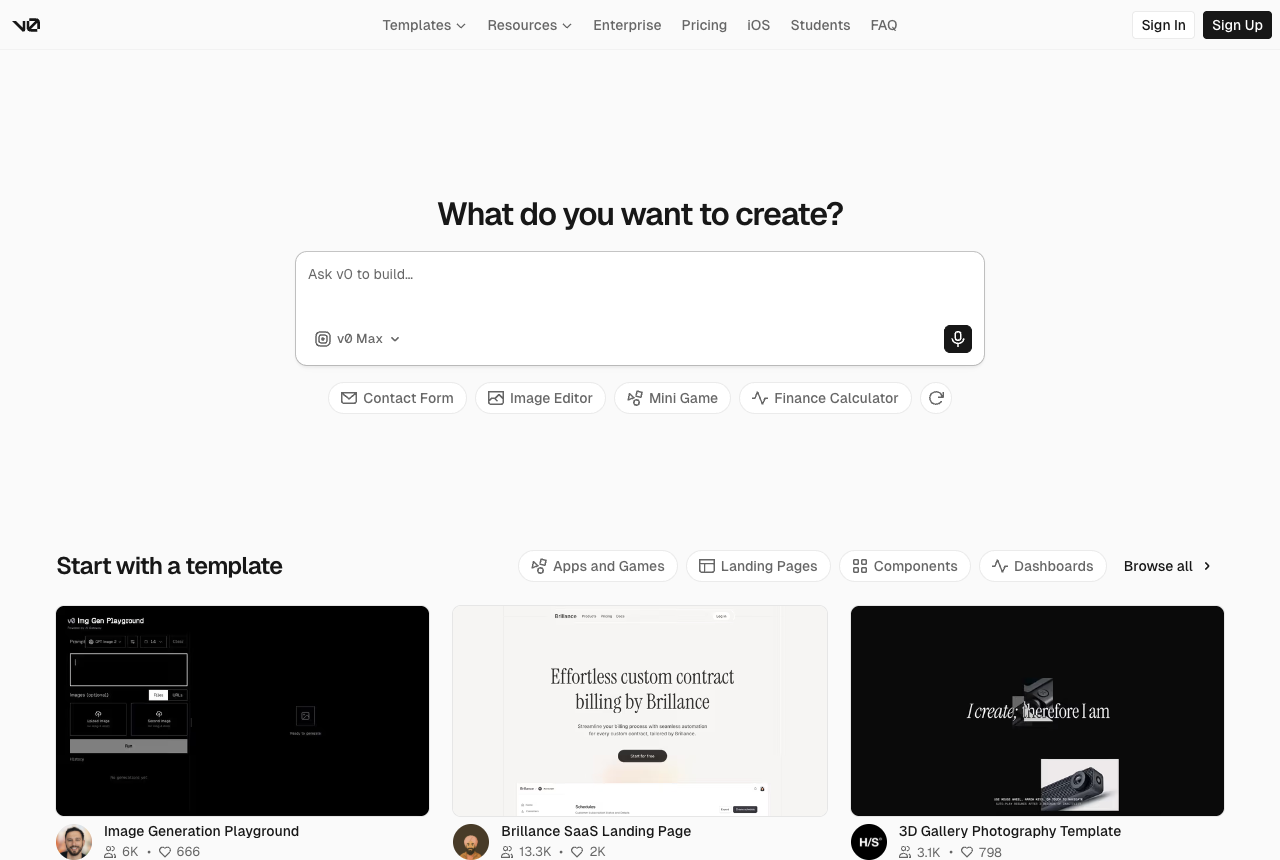
Where it gets honest: the May 2025 move from near-unlimited messages to usage-based token credits landed badly. One longtime user described it as a bait-and-switch and noted a simple one-pager with seven sections ate 12 of his 20 monthly credits on the first day. You now pay per iteration, including for v0's own mistakes, which is the part that stings. On the Vercel community forum, a developer reported burning through the included credits plus "$60 of top-ups" in a single month even while sticking to smaller models, and there's a running thread arguing the UI quality regressed through 2025 after the agent revamp: more generic, disconnected output and layouts that preview fine but break in use. Two more practical limits: the GitHub export is one-way, which breaks round-trip workflows, and the stack is locked to React/Tailwind/shadcn.
What is Lovable, and what is it best at?
Lovable is the fastest way to get from an idea to a working full-stack app, and it's a genuine hit with non-technical founders. Type what you want in plain English and it builds the frontend, wires up a Supabase backend with auth and file uploads, hosts it, and can even add Stripe. Reviewers regularly go from a blank workspace to a working UI in under 10 minutes, and speed is the single most-praised thing about it across Reddit, G2, and Product Hunt. It also does bi-directional GitHub sync, so the code isn't trapped.
For MVP validation, a client demo, or a simple SaaS prototype, Lovable is hard to beat on raw time-to-something-real. If you can't code and you want a live app this afternoon, this is the tool.
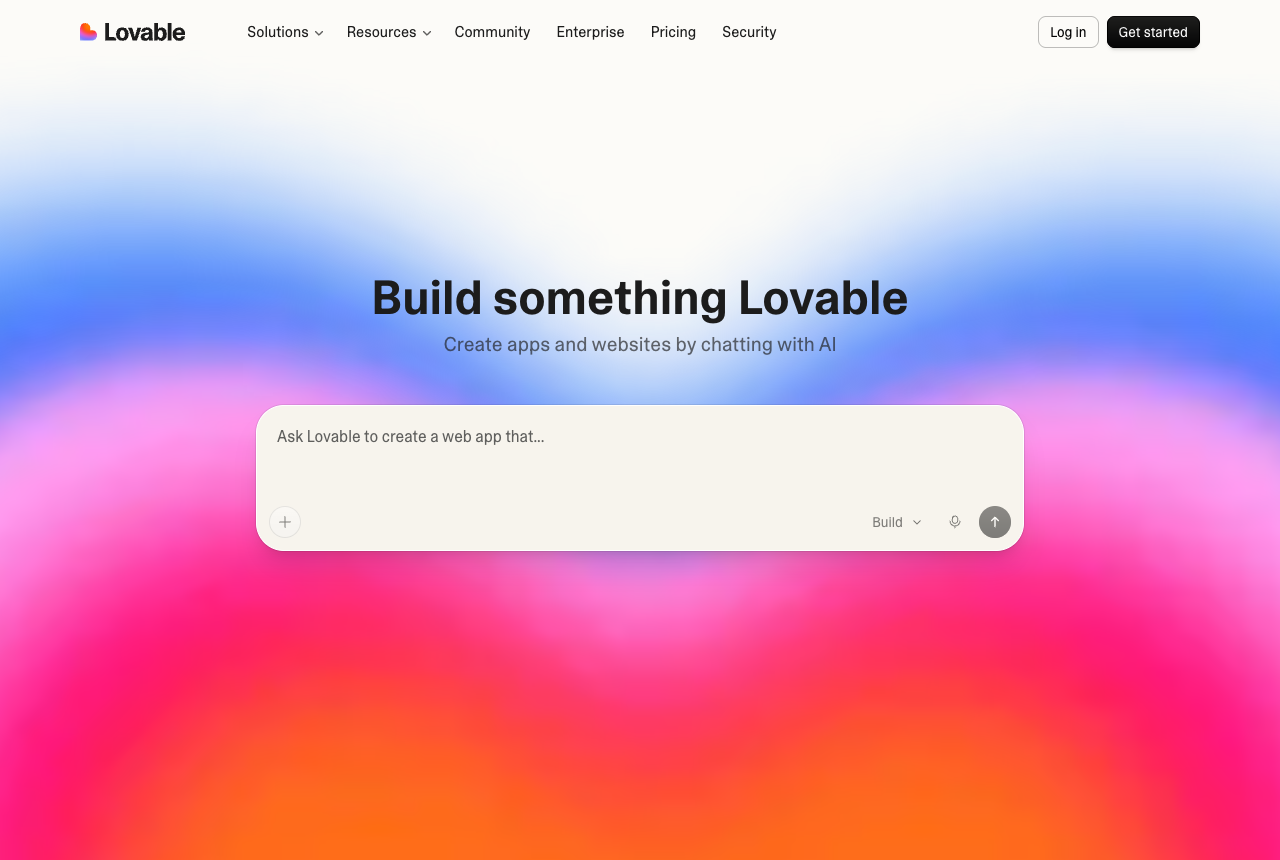
The honest part, and it's a big one: credit burn from debugging loops is Lovable's most-documented weakness. The AI fixes one bug, introduces two more, and tends to rewrite whole files instead of making targeted edits, which compounds the cost. A Superblocks review notes the free tier (5 credits a day, capped at 30 a month) is exhausted after two or three iterations, and quotes users saying the credit model "feels like a slot machine where you're not sure what an action will cost." The same review's blunt summary is that Lovable gets you "at most 70% of the way there," not production-ready for sensitive data, payments, or maintainable apps. Designer Anna Arteeva also flagged broken UI output, like white text on white backgrounds and duplicate close icons on a single modal, plus a tendency to over-style.
Which is cheaper, and why do both burn through credits?
Neither has a clean answer, because both run on usage-based credits, and that's the universal complaint about both tools. The cost isn't the sticker price, it's the unpredictability: you pay per iteration, so a feature that takes ten back-and-forths costs more than one that takes two, and you often can't tell in advance which one you're getting.
For v0, the pain is paying for the model's own mistakes. The usage-based model backlash on the Vercel forum is specifically about cost unpredictability, with that $60-of-top-ups-in-a-month report. For Lovable, the pain is the debugging spiral: because the AI rewrites whole files to fix small bugs, a single stubborn feature can eat a chunk of your monthly credits. In that same Superblocks review, users compare the credit model to "a slot machine where you're not sure what an action will cost."
The practical takeaway: if you do a lot of iteration (and AI design always means iteration), budget for credit top-ups on both, and treat the headline plan price as a floor, not a ceiling.
Can v0 build a full-stack app with a database and auth?
Not really, and that's by design. v0 is a frontend tool: it generates React UI components and pages, with improved Supabase integration to connect data, but it's not built to scaffold and wire a complete backend with auth, file storage, and hosting from a single prompt the way Lovable is. If you ask v0 for "a full SaaS with login and billing," you'll get good-looking frontend pieces, not a running app you can sign into.
If a whole working app from one prompt is the goal, Lovable (or another full-stack builder) is the right category. Use v0 when you already have an app and you need the UI for it to be sharp.
Are Lovable apps production-ready and safe to ship?
Be careful here: Lovable is excellent for prototypes and risky for production with sensitive data, and there's sourced evidence for the caution. A February 2026 security scan of Lovable-built apps found more than 170 of 1,645 apps with fully exposed databases (row-level security disabled), hardcoded API keys for services like OpenAI, Stripe, and Firebase sitting in client-side JavaScript, and broken authentication. One featured EdTech app in that report exposed 18,697 user records.
This wasn't a one-off. The underlying issue traces back to CVE-2025-48757, an RLS misconfiguration that let unauthenticated visitors query sensitive tables through the public API key. It was disclosed in March 2025 and went roughly two months without a full fix before public disclosure on May 29, 2025. None of this means Lovable is useless, it means the default output can ship with security holes you have to know to check for. Great for a throwaway MVP or a demo; do a real security review (or hand it to someone who can) before you put real user data behind it.
Which is better for developers vs non-technical founders?
Clean split: Lovable for non-technical founders, v0 for developers. If you can't (or don't want to) read code and your goal is a working app fast, Lovable's prompt-to-full-app flow is built for you. If you're a developer who owns a codebase and wants high-quality React components to drop in, v0 speaks your language, your stack, and your deploy pipeline.
The one place this gets interesting is the developer who already lives in a coding agent like Cursor or Claude Code and owns the code. Neither v0 nor Lovable was built around your existing repo, both assume a blank slate. That's the gap worth naming, and it's where a third option comes in.
What's the third option, and how does it explore designs differently?
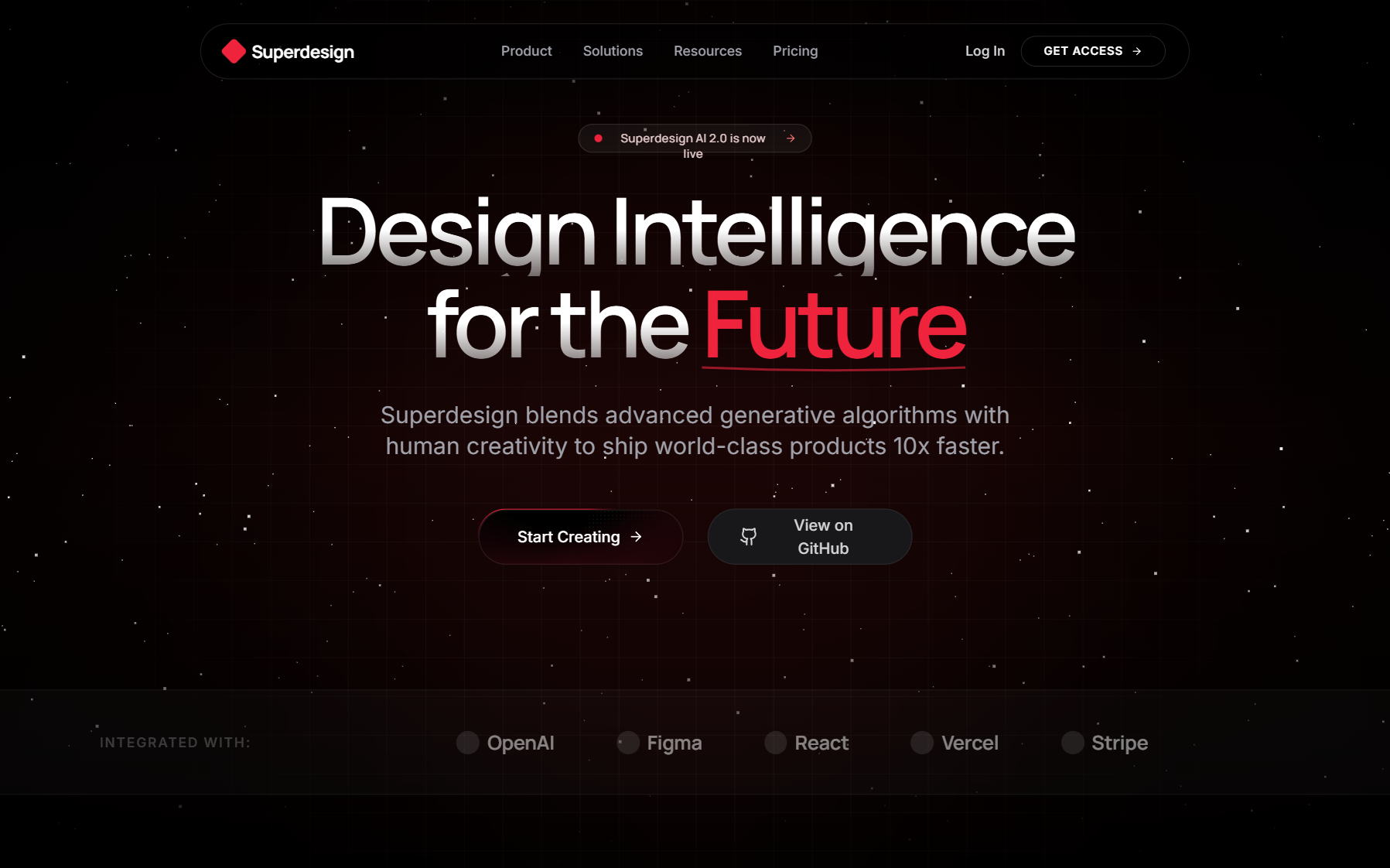
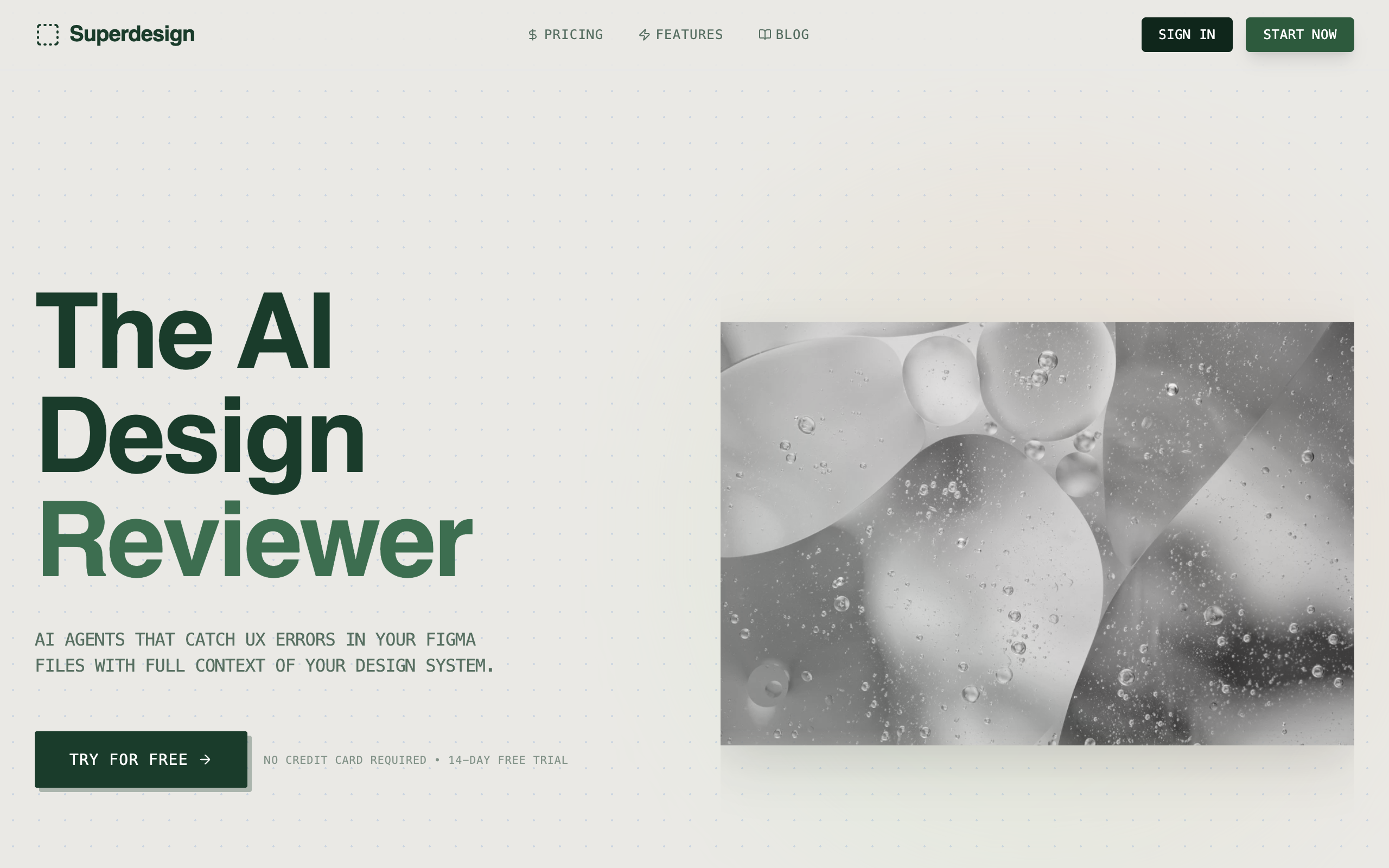
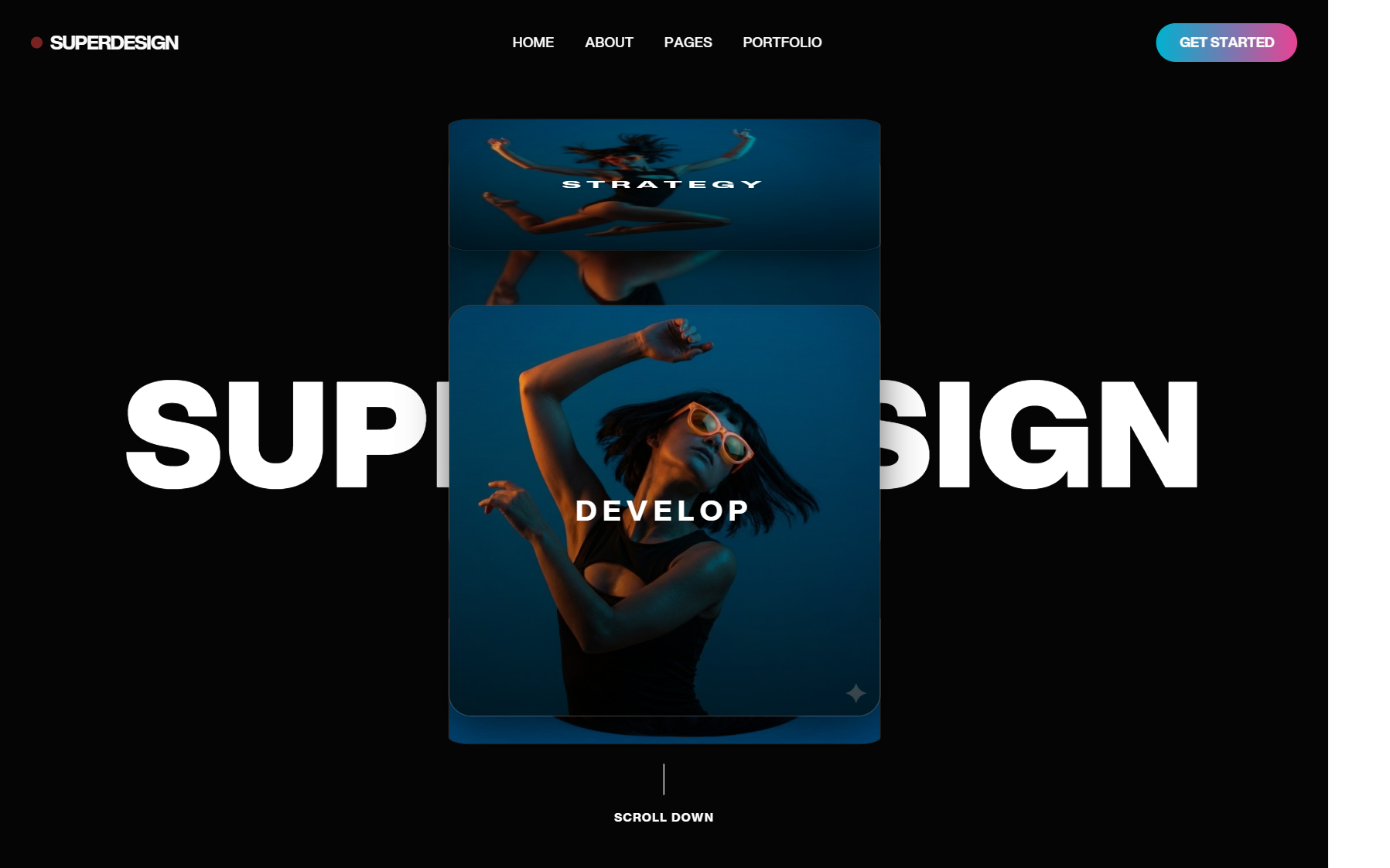
Here's the part both comparisons share but neither names: v0 and Lovable are linear. You prompt one thread, get one answer, and iterate down a single line. The third option flips that. Superdesign is an AI product design agent built around parallel, tree-search design: it forks several directions at once on an infinite canvas and generates whole multi-screen flows side by side, so you compare four banner variations (or four whole flows) instead of regenerating one at a time and hoping the next prompt lands.
The other thing it does that a greenfield builder can't: it starts from your real product, not a blank slate. Point the context-aware agent at a live page (your own production UI, or any site whose style you like) and it extracts the colors, components, and design language, then designs on top of that. Run the Superdesign skill from your coding agent (Claude Code, Cursor, or any agent) and it investigates your current UI first and builds a design-system file capturing your existing system, so the output fits what you already have instead of arriving from scratch. The deeper "reads your existing codebase" and credit-burn arguments live in our best AI UI generator roundup; the design-system file is covered in what is DESIGN.md. Output is real React and Tailwind, on a flat $20/mo Pro with a free tier, no metered credit meter to watch.
To be fair about the boundaries: if you want a whole backend app from a prompt, pick Lovable, Superdesign isn't a full-stack app builder. If you want quick shadcn components in the Vercel stack, v0 is great. Superdesign is for the developer who wants to fork several design directions at once on top of their real product, and stay in their IDE while doing it. If that's you, here's the deeper head-to-heads: Superdesign vs v0 and Superdesign vs Lovable. You can also browse the prompt library to see the kinds of UI it generates.
Do you own and can you export the code from v0 and Lovable?
Yes to both, with a catch on v0. v0 lets you export to GitHub, but the export is one-way, so once code leaves v0 you can't cleanly sync changes back, which breaks round-trip workflows like Figma to Cursor to v0. Lovable does bi-directional GitHub sync, so edits flow both ways. In both cases the code is yours, the difference is how painlessly you can move it in and out.
So which should you pick?
Resolve it by what you're building, then by who you are:
- Pick v0 if you're a developer, you own a project, and you need clean React/Tailwind/shadcn components. Just budget for credits and double-check recent output quality.
- Pick Lovable if you're non-technical and want a whole working app from a prompt this week. Treat it as a prototype, and run a security review before real users touch it.
- Consider Superdesign if you want to explore several design directions in parallel and design on your real product (your codebase or a live page you point it at), inside your coding agent, on a flat $20/mo instead of a credit meter.
If you want to go wider than these two, we keep an honest roundup of the best AI UI generators, a Lovable vs Bolt head-to-head, and the full comparison hub. And if "design that fits my repo" is the itch, that's what the Superdesign skill is for.
The honest bottom line: v0 vs Lovable is a false binary dressed up as a rivalry. One makes components, one makes apps, and a third makes UI for the codebase you already have. Match the tool to the job and you'll spend a lot less time (and a lot fewer credits) finding out the hard way.