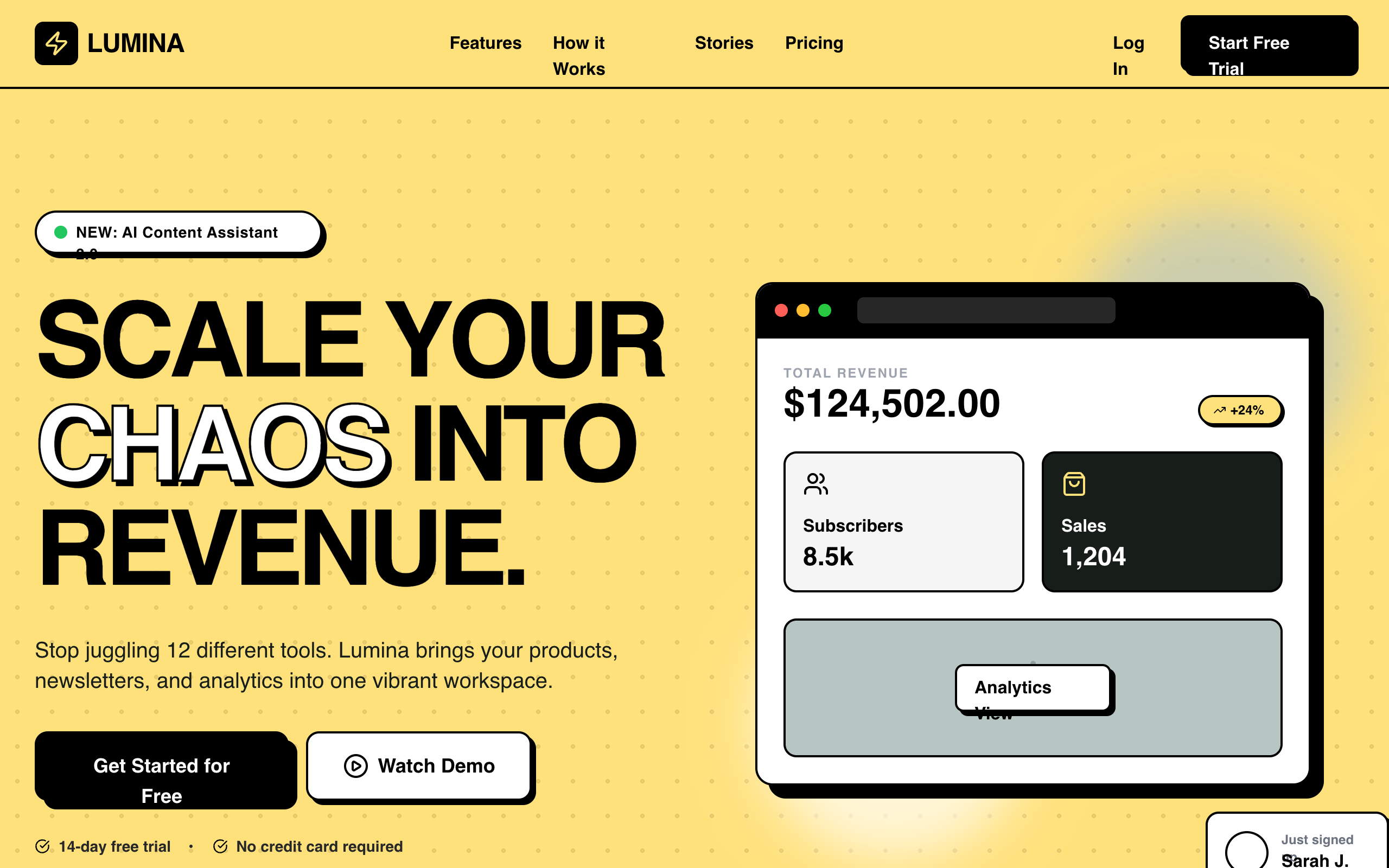
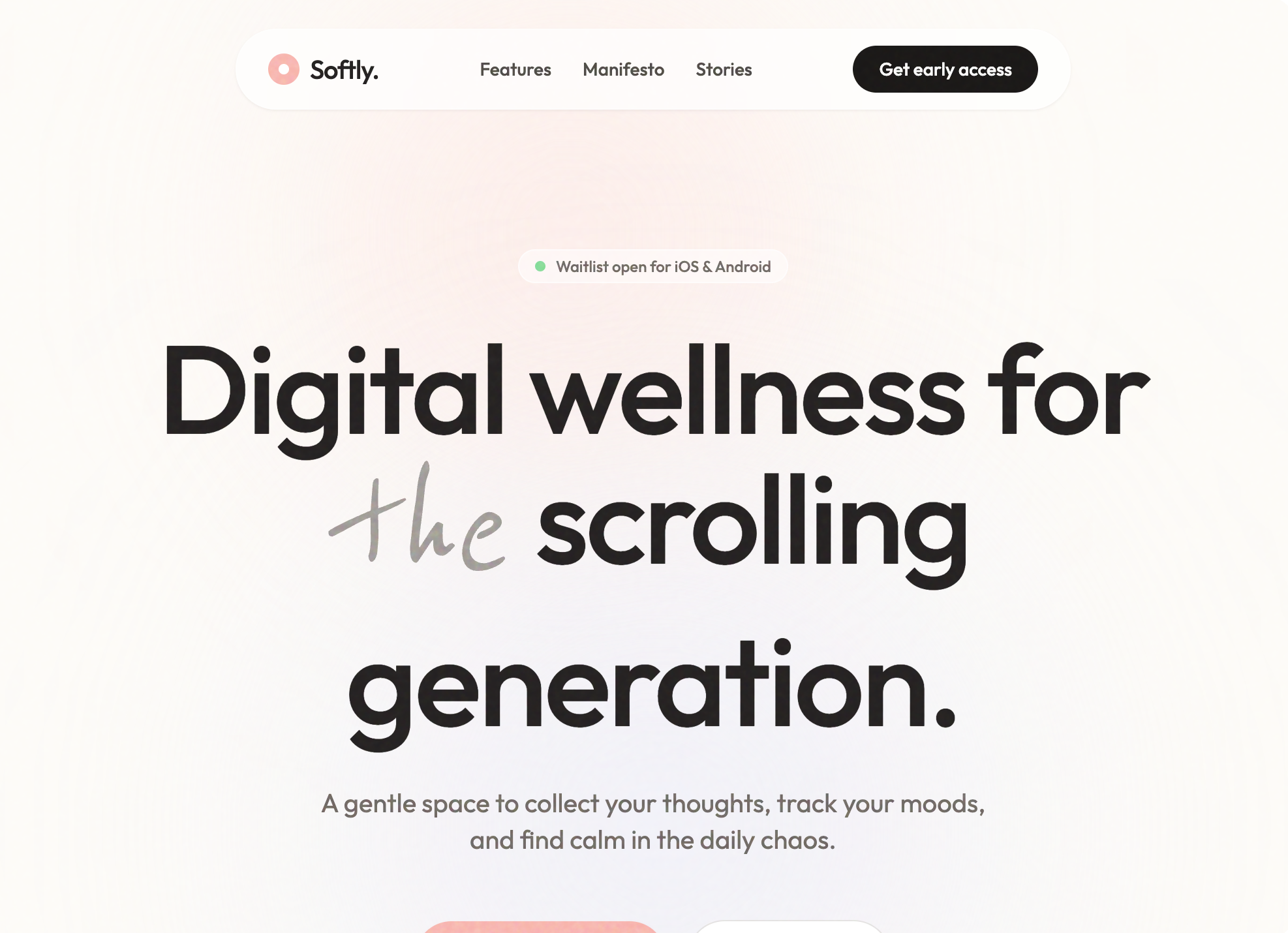
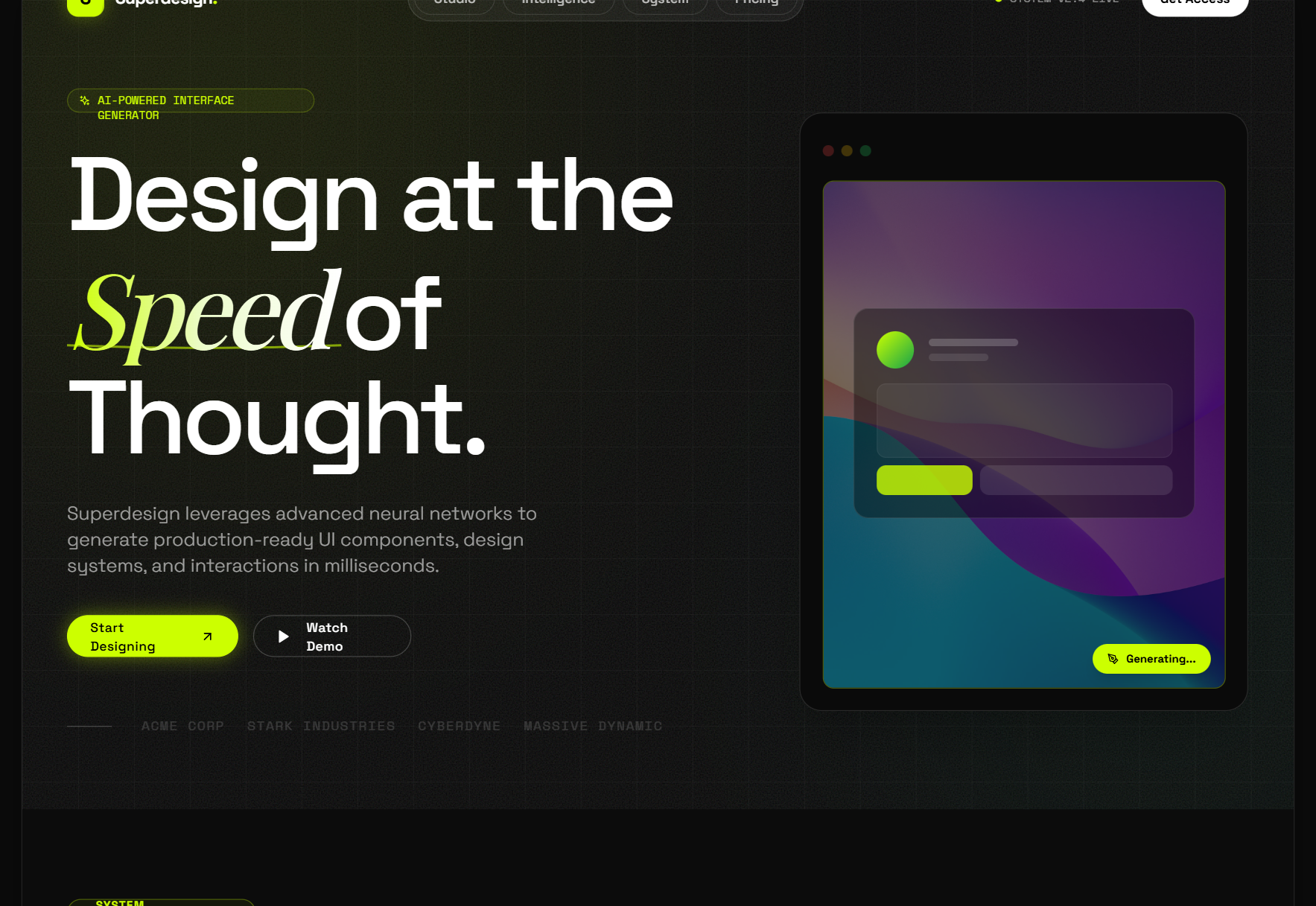
Yes, you can generate a full Next.js landing page with AI, and the version worth doing outputs real App Router code with Tailwind that you commit, edit, and deploy to Vercel yourself. The trick is choosing a generator that gives you clean React components instead of a hosted builder's locked or exported-then-messy code. This guide covers why code ownership matters for a Next.js dev, where builder tools leak, and how to prompt for clean App Router structure you can actually ship.

Generate a Next.js landing page in 4 steps
The version worth doing outputs real App Router code you own and deploy to Vercel yourself. The whole loop:
Generate a Next.js landing page, end to end
Name your stack and structure in the prompt
Spell out Next.js 15 App Router, Tailwind, server components, and sections-as-components so the model targets your conventions, not its defaults.
Generate on your codebase, not a blank slate
Run it as a skill from your coding agent so it reads your real components and tokens first, which is what shrinks the cleanup pass.
Set metadata and confirm SSG
Add the metadata export, then run next build and confirm the route shows the static circle marker, not dynamic.
Push to Vercel
Commit, push, and Vercel builds it like any other route. Real code, your project, no lock-in.
Can AI generate a real Next.js landing page?
Yes. AI tools generate Next.js landing pages as actual code, not just a preview. v0 by Vercel outputs React with Tailwind and shadcn/ui that drops into the App Router, and Superdesign generates the same kind of clean React and Tailwind you paste straight into app/page.tsx. The output is standard Next.js: server components by default, your own file structure, no proprietary runtime. You own it the moment it lands in your repo.
The thing to get right is the distinction between a generator and a builder. A generator hands you code and gets out of the way. A hosted builder keeps the page inside its platform and lets you export, which sounds the same until you read the diff. For a Next.js project that already has a layout, a Tailwind config, and a deploy pipeline, you want the generator path every time.
Why generate code instead of using a hosted builder?
Because owning real Next.js code gives you the four things a hosted builder structurally can't: you deploy on your own Vercel project, you edit real components in your editor, you control SEO through the App Router, and you have no lock-in or runtime tax. A builder optimizes for someone who never opens a code editor. You do, so the trade runs the other way.
Walk through what each one means in practice:
- You own it and deploy it yourself. The page is files in your repo.
git commit, push, and Vercel builds it like any other route. No "publish" button on someone else's dashboard, no plan tier gating your live site. - Real components, real edits. When the hero copy changes or marketing wants a new pricing block, you edit
app/page.tsxor a component, not a visual canvas that round-trips through an export. The code is composable: pull the hero intocomponents/hero.tsxand reuse it. - SEO control with the App Router. You set
metadataper route, generate Open Graph images, add JSON-LD, and choose static rendering. A hosted builder gives you a settings panel; the App Router gives you the actualMetadataAPI and full head control. - No lock-in. Standard React and Tailwind run anywhere. If you ever leave the generator, nothing breaks, because there was never a runtime to leave.
| AI code generator | Hosted page builder | |
|---|---|---|
| Output | Real Next.js/Tailwind files | Page inside the platform (export optional) |
| Deploy | Your Vercel project | Their hosting (or messy export) |
| Editing | Your editor, real components | Visual canvas, round-trips |
| SEO | App Router metadata, full head | Settings panel, limited |
| Lock-in | None, you own the code | Runtime/platform dependency |
Where do builder tools fall short?
The common failure is code you technically can export but don't want to maintain. Some builders wrap everything in nested divs with absolute positioning and inline styles, so the "export" is a tangle no Next.js dev would write by hand. Others keep the real logic on their platform and the export is a thin shell. Either way you inherit a page that fights your existing components and Tailwind config.
Even the good generators need honest framing. v0's output is genuinely strong React and Tailwind, but a 2026 independent review rates it 2 out of 5 for production-readiness, calling it "a sketchpad, not a full workshop," and notes it is mostly front-end. The fix for messy or locked code is not "find the magic tool that needs zero cleanup," it is to generate clean, standard code from the start and expect a light pass. More on that pass below.
There is a second leak specific to a blank-slate generator: it doesn't know your project. It invents a button component when you already have one, picks colors that aren't your tokens, and structures the file its own way. That reconciliation is where the saved time quietly leaks back out. Generating on your real codebase instead of from scratch is what closes it, the same argument we make in the best AI landing page generator guide.
How do you generate clean Next.js landing page code with AI?
You get clean App Router output by being specific in the prompt: name the framework, the structure, the styling system, and the responsive behavior, so the model targets your conventions instead of its defaults. A vague "make me a landing page" gets you generic slop. A prompt that spells out App Router, Tailwind, server components, and section structure gets you something close to shippable.
Here is a copyable prompt that produces a clean App Router landing page:
Generate a landing page for a Next.js 15 App Router project.

Stack and conventions:
- Single page component for app/page.tsx, server component by default
- Tailwind CSS for all styling, no inline styles, no CSS modules
- Extract each section into its own component under components/ (Hero, Features, Pricing, FAQ, CTA, Footer)
- Semantic HTML: header, main, section, footer, with real heading hierarchy
- Mobile-first responsive: stack on small screens, grid on md and up
- Accessible: alt text, aria-labels on icon buttons, focus styles

Product: a habit-tracking app called Streak.
Sections: hero with headline + sub + primary CTA, 3-up feature grid,
two-tier pricing, a short FAQ, and a footer.
Tone: clean, modern, lots of whitespace, one accent color.

Return the full code for each file with its path as a comment header.
Two details that matter most. First, "extract each section into its own component" stops the model from dumping 600 lines into one file, which is the single biggest reason exported landing pages feel unmaintainable. Second, "mobile-first responsive, stack on small screens, grid on md and up" forces real Tailwind breakpoints instead of a desktop layout that breaks on a phone.
If you want to generate on your existing project so the output matches your real components and tokens, run the generator as a skill from your coding agent instead of a browser tab:
npm install -g @superdesign/cli@latest
superdesign login
npx skills add superdesigndev/superdesign-skill
Then trigger it with /superdesign and a request like "design a landing page that matches our existing components." It reads your codebase first, explores several directions on a canvas at once, and hands the design back as React and Tailwind you wire into the App Router. That parallel exploration is the part a single browser chat thread can't do, and it lives in the same idea as turning a Figma file into real React: keep the design anchored to code, not a frame.
How do you ship it on Vercel?
You ship a generated Next.js landing page the same way you ship any route: set the metadata, keep it static, push to Vercel. Because it is real App Router code, nothing here is special to the generator. The two things people skip are SEO metadata and confirming the page renders statically, so do those before you call it done.
Add a metadata export to the page so search engines and social cards work:
import type { Metadata } from "next";

export const metadata: Metadata = {
title: "Streak: build habits that stick",
description: "A simple habit tracker that turns daily check-ins into streaks.",
openGraph: {
  title: "Streak: build habits that stick",
  description: "A simple habit tracker that turns daily check-ins into streaks.",
  images: ["/og.png"],
},
};

export default function Page() {
return <main>{/* generated sections */}</main>;
}
A landing page has no per-request data, so it should render as a static page (SSG). In the App Router a page is statically rendered by default as long as you avoid dynamic functions like cookies() or headers() and uncached fetch calls. Run next build and confirm the route shows as static (the ○ marker) rather than dynamic. Static means it serves from the edge, loads fast, and gives you the best Core Web Vitals out of the box, which is most of the SEO battle for a marketing page.
Before you deploy
- ✓Each section is its own component, not one giant file
- ✓metadata export set: title, description, Open Graph image
- ✓Page renders static (○ in next build), no accidental dynamic functions
- ✓Responsive checked at 375px, 768px, and 1280px
- ✓Real heading hierarchy: one h1, then h2s per section
- ✓Replaced placeholder copy and stock-feeling defaults
What still needs cleanup?
Plan for a light cleanup pass; no generator hands you a finished page. The realistic 10 to 15 minutes after generating: swap the model's invented component for your existing one, align colors to your Tailwind tokens, tighten copy that reads like a template, and fix any spacing that looks off on mobile. This is true of every tool, v0 included, and pretending otherwise is how people end up shipping generic-looking pages.
The cleanup shrinks the closer the generator starts to your real product. Generating from a blank slate means reconciling new components against your design system. Generating on your codebase means most of the output already matches, so you are editing copy and polish, not rebuilding structure. That difference is the whole reason a codebase-aware approach beats a browser tab for an existing Next.js project.
Generate your Next.js landing page
A Next.js landing page generator earns its place when it gives you real App Router code you own, deploy on Vercel, and edit like any other route, not a locked page in someone else's dashboard. Prompt for clean structure (sections as components, Tailwind, mobile-first), set your metadata, confirm SSG, and budget a short cleanup pass. That is the whole loop, and it runs in under 5 minutes for a first draft.
Try it in the browser with the Superdesign AI landing page generator: prompt a page, compare parallel directions, and take the React and Tailwind into your repo. Or browse the Superdesign prompt library to see the kinds of landing pages and components you can generate, then bring the prompt into your own project.