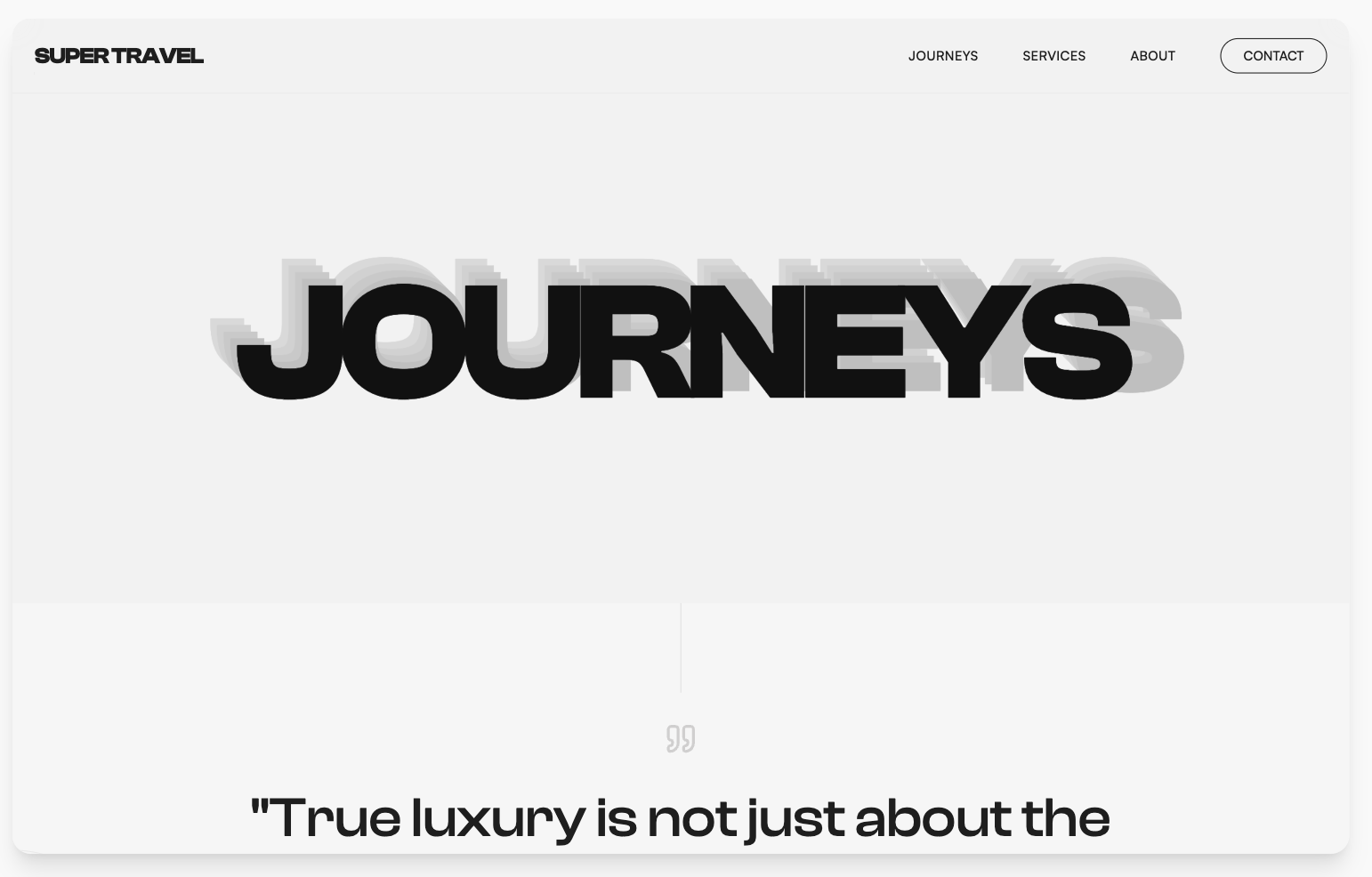
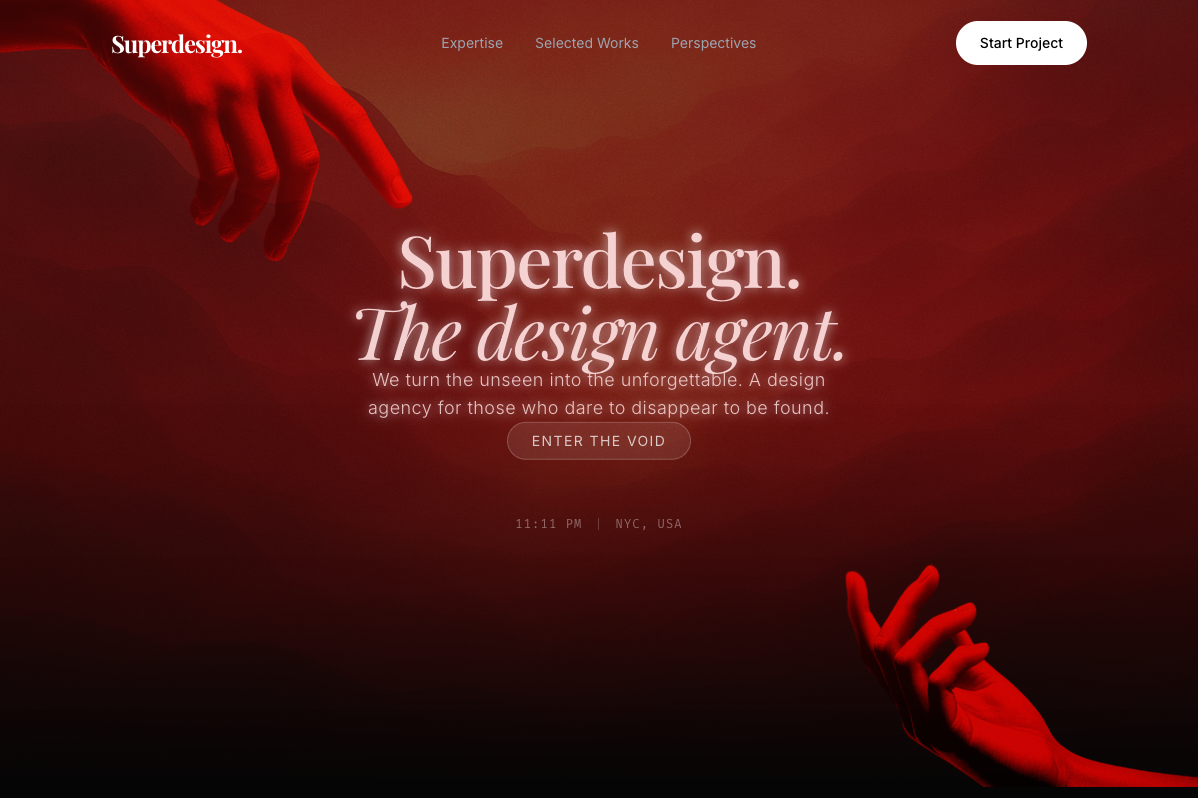
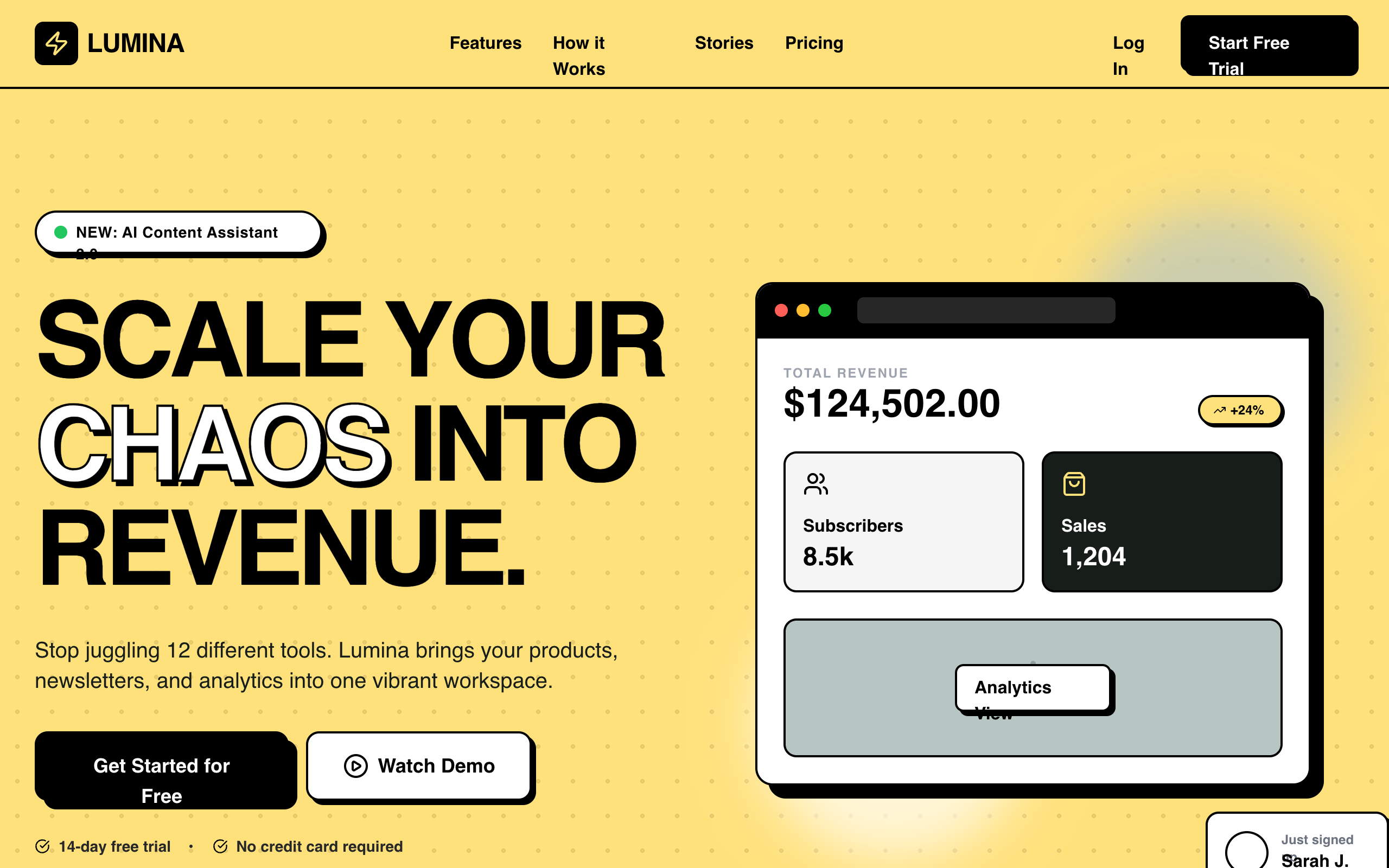
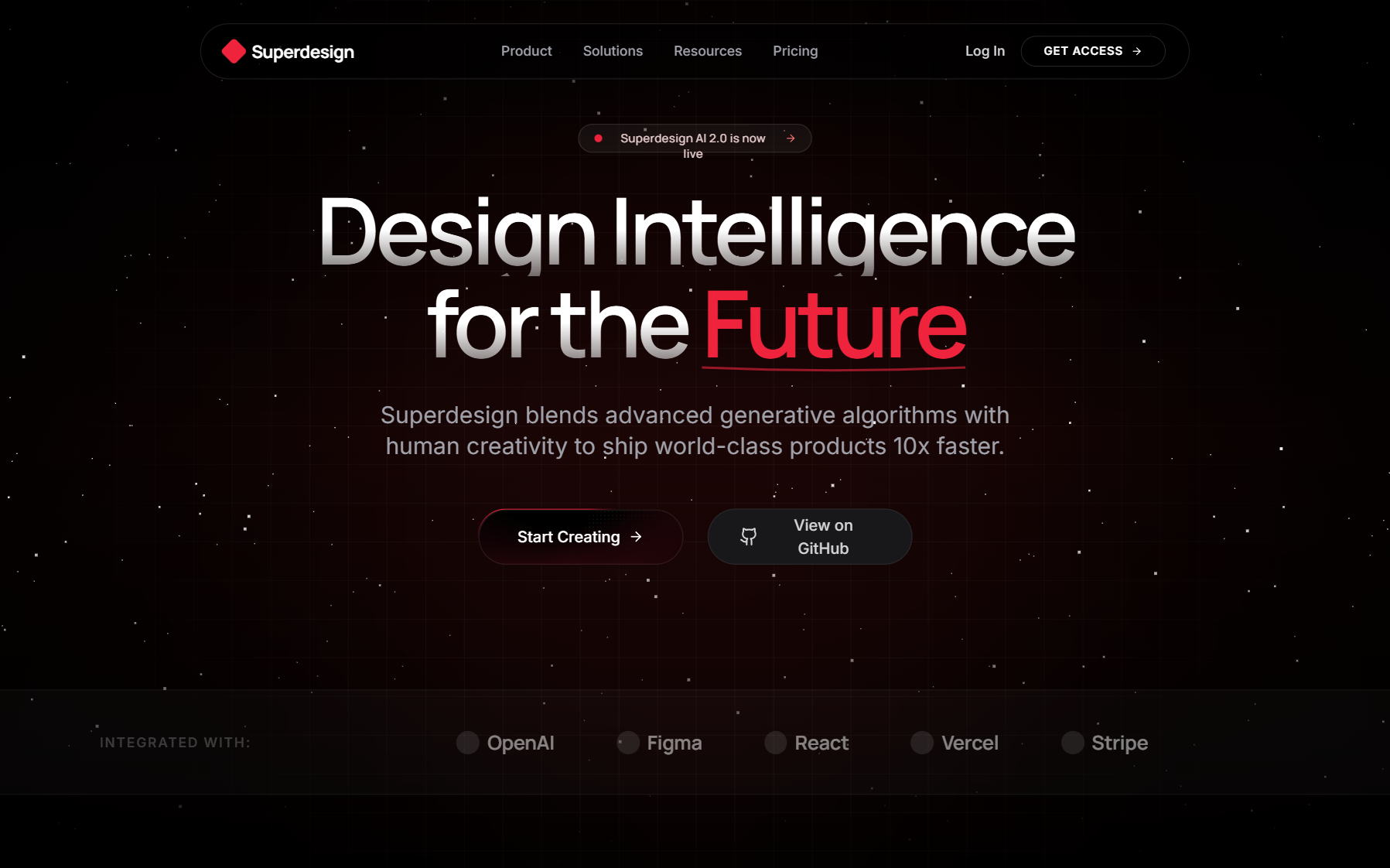
A SaaS landing page generator turns a prompt into a full landing page, hero, social proof, features, pricing, and CTA, in minutes instead of days. The catch is that most of them hand you a template or a locked design file. If you are an indie hacker or developer, the useful endpoint is a page that actually converts AND ships as real React and Tailwind you own. This guide covers what a high-converting SaaS landing page needs, the conversion patterns specific to SaaS, and how to generate one fast with copyable prompts you can paste in right now.

Make a SaaS landing page in 4 steps
Describe the page in plain English, grade what comes back, refine, and take the real code. The whole loop in one place:
Make a SaaS landing page with AI
Prompt with the checklist baked in
Describe the product, audience, outcome, and the sections you want, in order. Specificity is what separates an on-brand page from the generic gradient slop everyone recognizes.
Grade the draft on the essentials
Five-second test first, then check the hero, tiered social proof, a visible pricing tier, proof mapped to real objections, and an FAQ with schema.
Fork variations, do not re-roll one
Compare a few hero and pricing treatments side by side on the canvas, then carry the best one forward and keep tightening it in plain English.
Take real React and Tailwind into your repo
Export code you own, not a hosted page, so you can A/B test in your own stack and match your existing component library.
What a high-converting SaaS page needs
A SaaS landing page converts when three things are true: a visitor understands what the product does within about five seconds, they trust that it works, and they can take the next step without friction. One analysis of 300 SaaS pages found the top performers share eight concrete elements, and their absence almost always hurts conversion (The SaaS Directory).
Here is the checklist a generated page should hit. Use it to grade whatever AI gives you back.
Your SaaS landing page checklist
- ✓Hero headline that names a specific outcome and who it is for
- ✓Subheadline with one concrete benefit or proof point
- ✓A single high-contrast primary CTA above the fold
- ✓A real product screenshot, demo, or short video (not abstract art)
- ✓Tiered social proof: logos, specific quotes, and review badges
- ✓At least one visible pricing tier, no 'contact sales' wall to start
- ✓Feature-to-benefit sections placed next to the proof that backs them
- ✓An FAQ that answers real objections, with FAQ schema
- ✓Mobile-first layout with a sub two second load
Verbatim from The SaaS Directory, 300-page analysis
The five second test for your hero
Your hero has one job: answer "is this for me?" before the visitor leaves. The simplest gut check is the five second test. Show the page to someone who has never seen it, hide it after five seconds, then ask what the product does, who it is for, and what they should do next. If they cannot answer all three, the hero is failing no matter how good it looks (alexberman.com).
A strong SaaS hero names a specific outcome instead of a category. "Cut client reporting time in half" beats "The future of workflow automation." Specific numbers in headlines tend to outperform vague ones; one practitioner pegs the gap at around 35 percent (alexberman.com). Pair the headline with a single, action-specific CTA ("Start for free" beats "Get started") and show the actual product, a screenshot, short demo, or workflow animation, rather than a stock illustration. The 2026 standard has shifted from static taglines toward story-driven heroes that demonstrate the product in the first few seconds, the way Linear, Notion, and Framer do (Genesys Growth).
Social proof: specificity beats volume
The type of social proof matters far more than the amount of it, and most pages stop at the lowest-impact tier. A lone logo bar is a weak "attention license"; what moves a serious buyer is proof that speaks to their situation. The pattern that converts is tiered: recognizable logos under the hero, then specific written quotes with a photo, full name, title, and a measurable result, plus third-party review badges (G2, Capterra, Product Hunt) near the CTA so the visitor can verify them (The SaaS Directory).
Two practical moves the listicles agree on. First, distribute proof through the page instead of dumping it all in one section at the bottom; put a testimonial about time savings right next to the claim that you save time (alexberman.com). Second, map proof to objections, not just to satisfaction. If buyers worry that setup is hard, surface a quote from someone who says setup was easier than expected; if they are on a competitor, show someone who switched (Studio Maydit). Testimonials carry weight because people trust other people far more than brand copy (Genesys Growth).
How to make a SaaS landing page with AI
The fastest path is to describe the page in plain English and let an AI design agent build it, then refine. The quality of the output tracks the quality of the prompt: a one-liner gives you the generic gradient slop everyone recognizes, while a prompt that specifies the audience, the outcome, the sections, and the tone gives you something on-brand. Here is a copyable starting prompt that bakes the checklist above into the request.
Design a high-converting landing page for [Product], a [one-line category, e.g. "scheduling tool for solo consultants"].

Audience: [who it is for, e.g. "indie founders who hate admin"].
Primary outcome to sell: [specific result, e.g. "stop chasing clients to book calls"].
Tone: confident, modern, a little playful. Not corporate.

Sections, in order:
1. Hero: outcome-driven headline (under 10 words, names a specific result), a one-line subheadline, ONE primary CTA "Start for free", and a product screenshot mockup on the right.
2. Logo bar: 5 placeholder company logos with a "trusted by" line.
3. Three feature-to-benefit blocks, alternating image left/right, each with a one-line proof point.
4. A testimonial with photo, name, title, company, and a measurable result.
5. Pricing: 3 tiers (Free, Pro, Team), Pro highlighted, monthly/annual toggle.
6. FAQ: 5 questions that answer real objections (setup, pricing, migration, security).
7. Final CTA section repeating "Start for free".

Style: clean, lots of whitespace, one accent color, real type hierarchy. Avoid the default indigo-to-violet gradient and centered emoji cards.
You can run a prompt like this straight in the browser with the AI landing page generator, no install needed. For a deeper tour of how the AI generators compare on output quality, pricing, and codebase fit, see the pillar guide on the best AI landing page generator.
Iterate, do not settle for the first draft
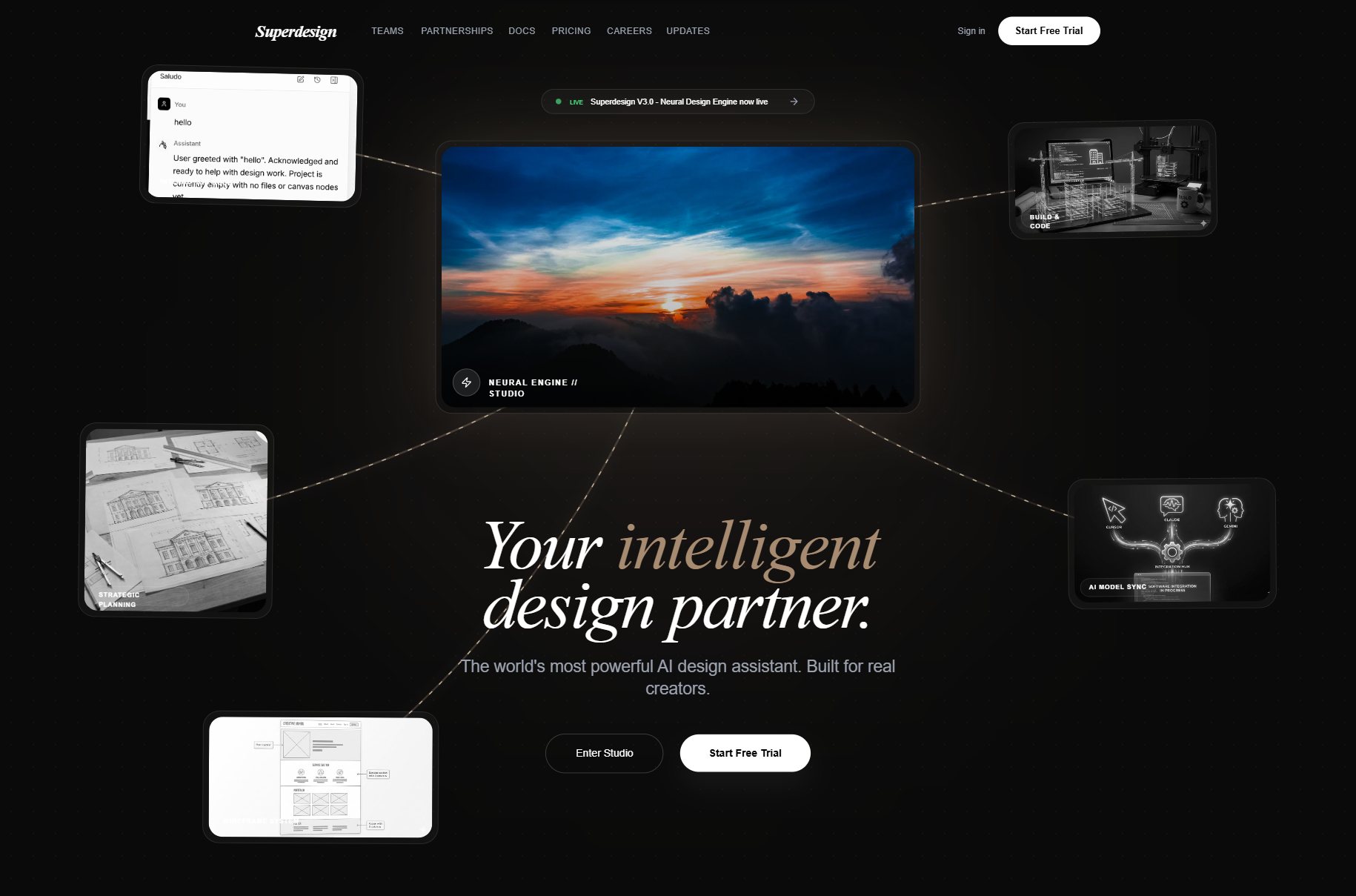
The first generation is a draft, not the answer, so the real win is exploring directions fast and refining the one that fits. Most tools make you re-roll one variation at a time. Superdesign forks several directions in parallel on an infinite canvas, so you can compare a few hero treatments or pricing layouts side by side and carry the best one forward, instead of committing too early. Then you keep prompting in plain English to tighten it.
Take the current hero and give me 3 variations:
1. A bolder headline that leads with the number/outcome.
2. A version with the product demo as a short looping video instead of a static shot.
3. A version with a G2-style rating badge and one short quote directly under the CTA.

Keep the same color system and type. Make all 3 mobile-first.
When the copy needs work, raid the prompt library for proven prompts that produce good UI on the first try, then adapt one to your product. It is free, works with any coding agent, and saves you from guessing at the wording.
Get real React and Tailwind you own
Here is the difference that matters once you actually want to ship: most generators stop at a hosted page or a design file, while a code-output agent hands you real React and Tailwind you drop into your repo. A page builder that locks the output behind its own hosting is fine for a quick microsite, but it is a dead end the moment you need a custom integration, an A/B test in your own stack, or the page to match your existing component library.
| Tool type | What you get | Who it fits |
|---|---|---|
| Page builders | Hosted page, limited export | Non-technical, quick microsite |
| Mockup generators | Design file (Figma, image) | Designers, stakeholder review |
| Code agents | Real React and Tailwind in your repo | Indie hackers, developers shipping |
Superdesign sits in the third row. It is an AI design agent that outputs production React and Tailwind, runs in the browser or as a skill inside Claude Code and Cursor, and when you point it at an existing project it reads your current UI first so the landing page speaks your tokens, spacing, and components instead of arriving as a stranger. You generate the page, compare variations, then have your coding agent fetch the design and implement it. No handoff, no re-skinning, no platform lock-in.
Common SaaS landing page mistakes
The most expensive errors are about messaging, not pixels. The recurring ones reviewers flag: a feature-focused headline with no benefit, a hero that describes a category instead of an outcome, generic testimonials from blurry avatars, too many competing CTAs, social proof buried at the bottom, a "contact sales" wall blocking entry-level signup, and slow load times that spike bounce (Genesys Growth). Keep the copy at a fifth to seventh grade reading level, repeat one consistent CTA down the page, and design mobile-first since mobile traffic often dominates even in B2B (The SaaS Directory).
AI will not save you from a broken message. If you cannot pass the five second test in plain words, no generator will fix it for you. Nail the outcome and the audience first, then let the tool handle the layout.
Ship your SaaS landing page
You can have a real, on-brand SaaS landing page in under 5 minutes: start with a prompt that names the outcome and the audience, grade the result against the checklist above, refine the hero and proof, then export real React and Tailwind into your repo. The whole point is to skip the template trap and end with a page you own and can keep optimizing.
Start in the browser with the AI landing page generator, or if you live in Claude Code or Cursor, add the Superdesign skill and drive it from your agent. For the full tool landscape, the best AI landing page generator pillar lays out where each option fits. Ping me anytime if you want a second set of eyes on your hero, and we'll sort it together. 🙂