To turn Figma into real React components, you have three paths: a Figma-to-code plugin like Anima or Locofy, the Figma MCP server feeding design data into your IDE, or skipping the Figma export entirely and generating components from a prompt or a captured live element. The hard part is not getting React out. It is getting reusable, prop-driven components that match your existing design system, instead of a wall of one-off markup you rebuild anyway.
This is a workflow guide, not a tool pitch. If you just want a converter to drop a frame into, Superdesign has a Figma to React tool for that. This page is about the harder question every method skips: how do you make the output composable enough to keep?

Get reusable React from Figma, step by step
The hard part is not getting React out, it is getting reusable, prop-driven components instead of a one-off dump. The mechanical move that decides it is mapping each Figma variant to a typed prop:
Map a Figma variant to a React prop
Name the variant in code style, in Figma
Rename the variant property and its values to match code: a property "Type" with "Primary / Secondary / Ghost" becomes variant with primary / secondary / ghost. Lowercase, no spaces, consistent.
Translate each property to a typed prop
One Figma variant property becomes one React prop, and its values become the union type: variant?: "primary" | "secondary" | "ghost". Do this mapping before you generate, not after.
Generate, then prove it in Storybook
Run whichever path you chose, then drop the component into Storybook. The variant controls render for free, which confirms the props are real and reusable, not cosmetic.
What does Figma to React mean?
Figma to React is the practice of translating a Figma design into working React components, ideally ones with typed props, design tokens, and structure your team would actually merge. The phrase covers two very different outcomes that get lumped together: a literal visual translation (a frame rebuilt as nested divs) and a real component (a Button with a variant prop that lives in your library). Only the second is worth keeping.
The distinction matters because the cheap version is everywhere and the useful version is rare. Most tools nail pixel fidelity and stop there. As one practitioner put it after pushing Figma variants into Storybook, "your Figma variants already ARE your props", they just need to speak the same language as your code. That mapping, variant to prop, is the whole game.
Why is most Figma to React code throwaway?
Because converters optimize for "looks identical," not "fits your system," and those goals pull in opposite directions. A literal converter reproduces every Figma layer as a DOM node, so a single card arrives as a deep stack of meaningless wrapper divs with hardcoded pixel values and no reuse. It renders correctly and is miserable to maintain.
This is measurable, not a vibe. In a hands-on 2026 test that ran the same pricing card through four tools, the reviewers found Anima produced 9 to 11 levels of nesting for one card, with multiple wrapper divs that served no purpose, and concluded the output was "essentially a screenshot rebuilt in HTML" where refactoring into maintainable components took longer than building from scratch. That is the trap: you save an hour on the first render and lose two on cleanup.
The fix is to stop treating the Figma frame as the source of truth and start treating your component contracts as the source of truth. A reusable React component looks like this, and no literal converter will hand it to you:
type ButtonProps = {
variant?: "primary" | "secondary" | "ghost";
size?: "sm" | "md" | "lg";
children: React.ReactNode;
};

export function Button({ variant = "primary", size = "md", children }: ButtonProps) {
return (
  <button className={buttonStyles({ variant, size })}>
    {children}
  </button>
);
}
One component, three variants, token-bound styles. That is the target for every path below.
What are the three paths from Figma to React?
There are three credible routes in 2026, and they differ by where they start and how much cleanup they leave. Plugins convert a finished frame. The Figma MCP feeds design data to your coding agent so it writes the component in context. And the skip-Figma path captures your live UI or designs on a canvas, then componentizes from there. Find your row, then read the matching section.
| Path | How it works | Reuses your components? | Best for | Cleanup |
|---|---|---|---|---|
| Figma-to-code plugin | Export a frame, get React (Anima, Locofy, Builder.io) | Partial, only with Code Connect mapping set up | Teams whose source of truth is the Figma file | High on raw frames, lower with mapping |
| Figma MCP server | Feed frame data into Cursor/Claude Code, agent writes the code | Yes, it reads your repo for context | Adding one component to an existing codebase | Medium, you still guide the agent |
| Skip Figma | Capture live UI or prompt on a canvas, then componentize | Yes, reads your repo / captures real DOM | Developers who never wanted to draw the frame | Low, output starts from real code |
One thing every honest source agrees on: the tool matters less than your file. As one practical guide concluded after comparing platforms, the single biggest predictor of output quality is your Figma file structure, not the tool. Messy layers and inconsistent variant names produce messy code no matter what you run.
How do Figma to React plugins work?
Plugins like Anima, Locofy, and Builder.io run inside Figma, read your selected frame, and emit React. They are the right call when your design team owns the Figma file as the source of truth and you want a faster handoff. The catch is the default output: on a raw frame with no mapping, you get the nested-div translation described above, which is why the comparison test rated plugin output strongest for disposable marketing pages and weakest for a component library.
To get reusable components out of a plugin, you have to do the wiring. The lever is Code Connect, Figma's feature for linking a Figma component to its real code counterpart so Dev Mode and AI tools surface your component with the right props instead of regenerating one. Builder.io's Fusion does the same idea automatically: it compares the Figma components in the export with the components in your repo, so if your system already has a Button or Card, it reuses them with the correct props and naming. Without that mapping, a plugin cannot know your Button exists, so it invents a new one every time.
What is the Figma MCP path?
The Figma MCP (Model Context Protocol) server creates a live connection between Figma and an AI coding assistant like Cursor or Claude Code, passing structured design data (dimensions, spacing, tokens, component hierarchy) directly into your IDE instead of a screenshot. Your agent then writes the component with full awareness of the surrounding code, which is why this path produces the most context-fit output of the three.
It shines in a specific situation: adding one component to an existing app, not rebuilding a whole page. As the same practical guide notes, Figma MCP is the better choice when you need to add a component to an existing codebase, because full-page export tools create integration friction in projects that already have established patterns. You select the frame, feed the link into your prompt, and let the agent generate the component against your real conventions. The tradeoff is that it is not one-click: you still steer the agent, and quality still rides on clean Figma naming.
How do you map Figma variants to React props?
You make your Figma variant names match your code prop values exactly, so the conversion is mechanical instead of guesswork. A Figma button with variants "Primary, Secondary, Ghost" should become variant: "primary" | "secondary" | "ghost" in TypeScript, which then generates clean Storybook controls for free. Get the naming right and every tool downstream, plugin, MCP, or agent, produces tighter code. Get it wrong and you spend the saved time renaming type back to variant and small back to sm.
Here is the checklist that turns any of the three paths into reusable output rather than a dump:
Get reusable components, not a one-off dump
- ✓Name Figma variants in code style: lowercase, no spaces, consistent (primary, not Main).
- ✓Map Figma variant properties to React props one-to-one before you generate.
- ✓Bind colors, spacing, and type to design tokens, never hardcoded pixel values.
- ✓Use Code Connect (or a codebase-aware tool) so existing components get reused, not reinvented.
- ✓Keep components small and composable; reject any output nested more than a few levels deep.
- ✓Document each component in Storybook so the variant controls prove the props are real.
This is also the honest part most vendor pages skip: no tool gives you 100 percent of this automatically. Expect to review names, collapse nesting, and confirm token usage on every conversion. The goal is to minimize that cleanup, not pretend it away.
How do you skip Figma entirely?
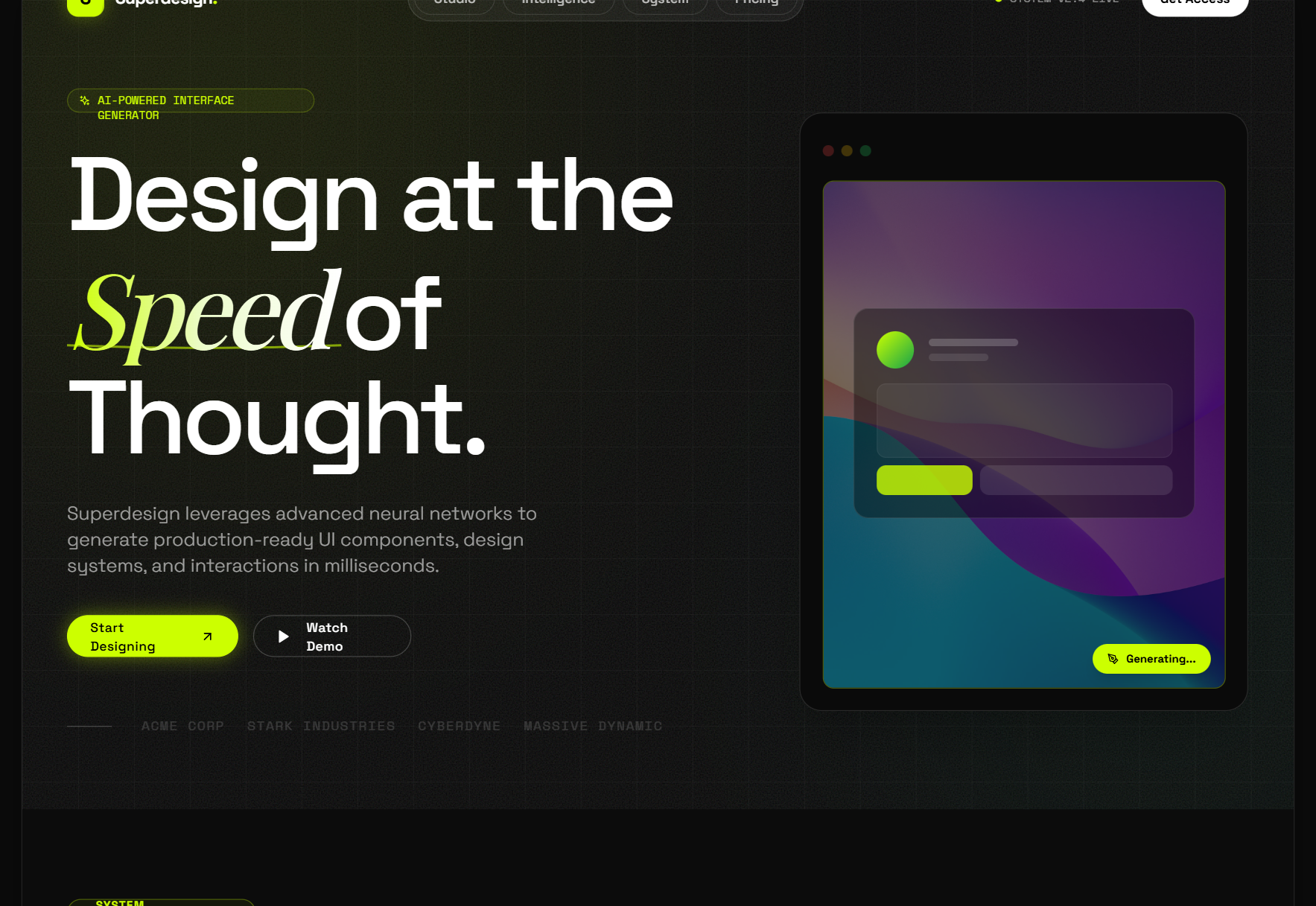
You skip the frame by capturing the UI you actually want, then componentizing from real code rather than redrawing it first. This is where Superdesign leads, because it removes the step where most reuse gets lost: the redraw. Two moves replace the Figma export. Its free Chrome Component Grab captures any live web element, your own production UI or a pattern you admire, and turns the messy DOM into clean Tailwind. And invoked as a skill from your coding agent, it reads your existing codebase first, so the React and Tailwind it generates reuses your real components instead of inventing new ones.
That codebase awareness is the direct answer to the reuse problem this whole page is about. When the tool already knows your Button, your tokens, and your file structure, less of the output is throwaway by construction. On top of that, it explores parallel variants on an infinite canvas, so you compare several componentized directions side by side instead of regenerating one thread at a time, then take the real React and Tailwind out. No frame to keep in sync, no handoff where design and code drift apart.
It is not a Figma replacement for collaborative visual design, and it is fair to say so. It is the path for a developer whose end goal is composable code in the repo, not a frame. If you want to try the loop in the browser first, browse the Superdesign prompt library to see the kinds of components you can generate.
Which path should you choose?
Pick by where you start and how much cleanup you can stomach:
- Your team's source of truth is the Figma file → a plugin (Anima, Locofy, Builder.io) plus Code Connect mapping. Without the mapping, expect heavy cleanup and a lot of wrapper divs.
- You are adding one component to an existing app → the Figma MCP server feeding Cursor or Claude Code. Best context fit, still hands-on.
- You never wanted to draw the frame → skip Figma. Capture the live component or design on a canvas, and let a codebase-aware agent reuse your real components.
Whichever you choose, the reusable-versus-throwaway outcome is decided by your naming and your tokens, not the logo on the tool. For the broader conversion picture see Figma to code and Figma to Tailwind, for the tools-versus-frames debate see the best Figma alternative, and for where this fits in the wider field read the best AI UI generator for developers. Then go build the component once and reuse it everywhere, which was the point of opening Figma in the first place.