The Claude Code skills worth installing are the ones that fix a real bottleneck in your workflow, not the ones with the most stars. The short list most developers converge on: superpowers for planning and TDD, Anthropic's frontend-design for UI, the official document skills for files, a browser-testing skill for verification, security-review for a vulnerability pass, and one design layer so your UI does not look like everyone else's. This roundup groups them by the job they do, tells you how to install each one, and is honest about where each one stops helping.
A quick definition first, because the words are overloaded. A Claude Code skill is a small SKILL.md instruction file (sometimes plus scripts) that Claude loads on demand when a task matches its description. A plugin is the packaging and distribution layer around skills, commands, and MCP servers. You install most skills one of two ways: through the plugin marketplace inside Claude Code, or with Vercel's skills CLI. Both show up below.

How to install a Claude Code skill
There are two install paths, and which one a skill uses depends on how its author shipped it. The marketplace route lives inside Claude Code:
# add the official Anthropic marketplace, then browse or install
/plugin marketplace add anthropics/skills
/plugin
The CLI route uses Vercel's skills tool and pulls straight from a GitHub repo:
npx skills add <owner>/<repo>
One habit before you install anything from a third party: open the SKILL.md and check what tools it grants itself. A skill can run shell commands and read your files, so treat it like any other dependency. The official anthropics/skills marketplace is the safest starting point, and most of the picks below either live there or are widely vetted.
Best skill for planning and discipline
Install superpowers if your problem is that Claude charges into code before it understands the task. It is a methodology framework by Jesse Vincent (obra) that forces a plan-first, test-driven loop: write the plan, get agreement, write the test, then the code, with subagents for parallel research and structured verification along the way. It is the most-recommended single skill across every 2026 roundup, and for good reason. Most bad Claude Code output is not a model failure, it is the model solving the wrong problem confidently.
/plugin marketplace add obra/superpowers-marketplace
/plugin install superpowers@superpowers-marketplace
(It is also on Anthropic's official marketplace as superpowers@claude-plugins-official if you prefer that catalog.) What it does not do: it will not make Claude think for you. If your plan is vague, a disciplined process just executes a vague plan more thoroughly. Pair it with skill-creator, the official skill that interviews you, scaffolds the folder, and writes a SKILL.md so you can capture your own repeated workflows instead of re-explaining them every session.
Best skill for design and UI
Anthropic's official frontend-design skill is the fastest way to stop Claude defaulting to Inter and purple gradients. It runs before Claude writes front-end code, bans generic fonts by name, and forces a deliberate aesthetic direction (editorial, brutalist, maximalist, and so on). It is free, it is one of the highest-leverage changes you can make, and you add it from the official Anthropic marketplace.
Here is the honest limit, and it is the one nobody tells you up front: the skill is a set of heuristics, not a source of taste. It moves Claude off the exact center of the distribution, but it does not give Claude a concrete picture of what your product should look like, so the output still drifts toward familiar layouts. The full reasoning is in our guide on why AI design looks generic, and the practical fixes are in how to design good UI with Claude Code. The fix everyone arrives at by hand is reference grounding: give Claude a real visual reference instead of a vibe.
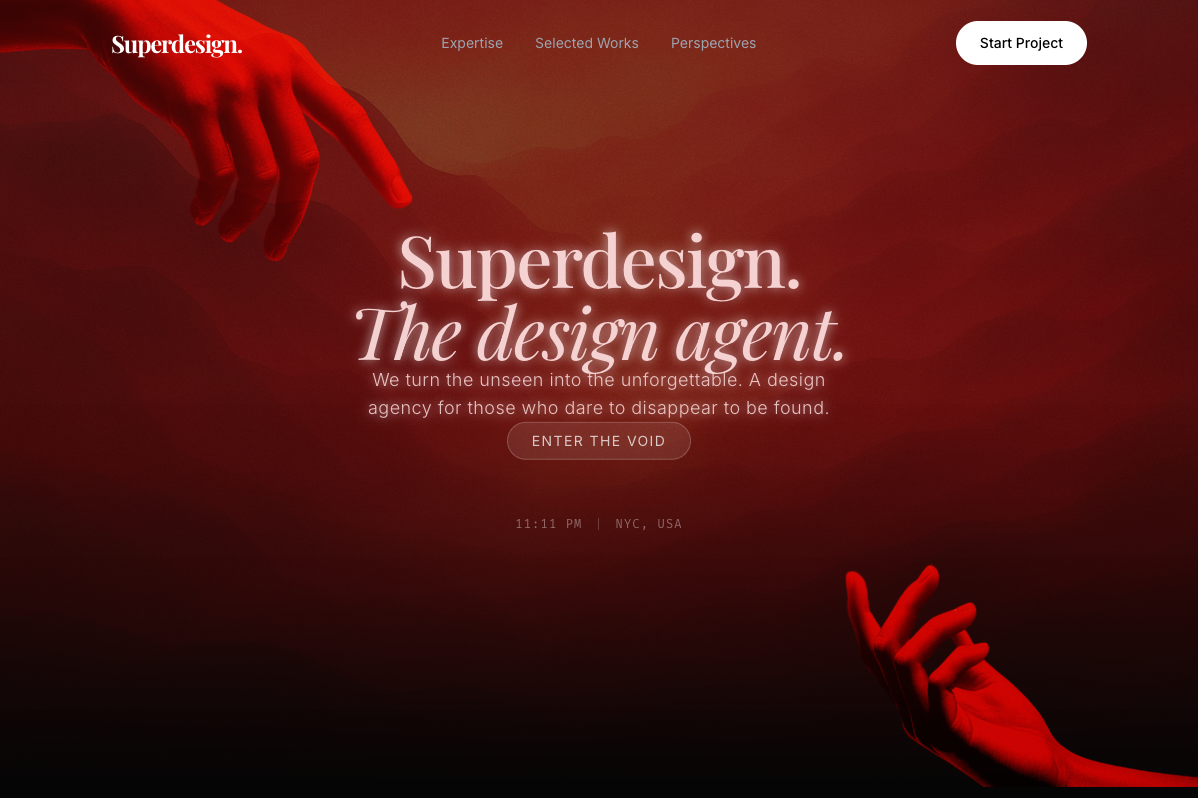
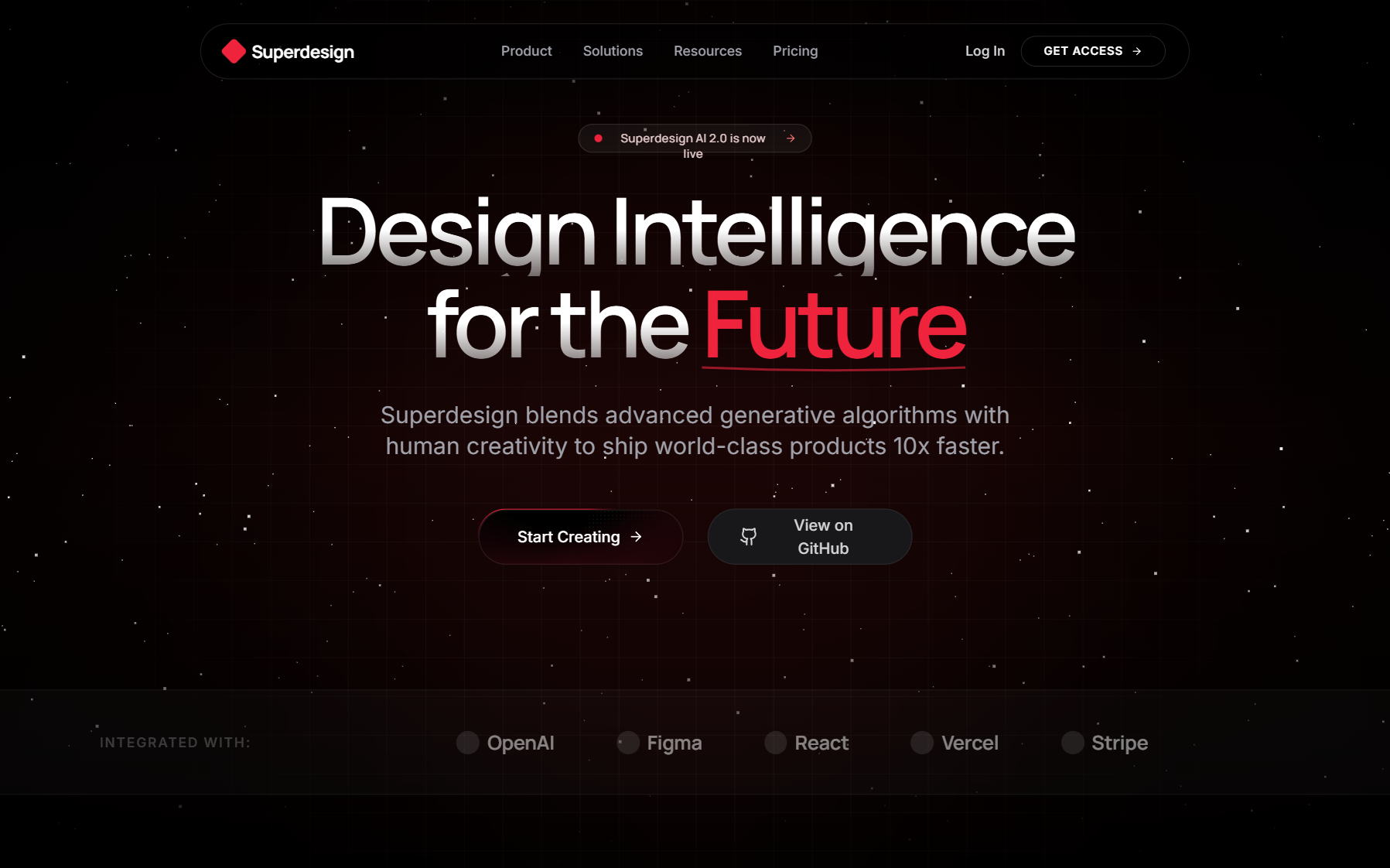
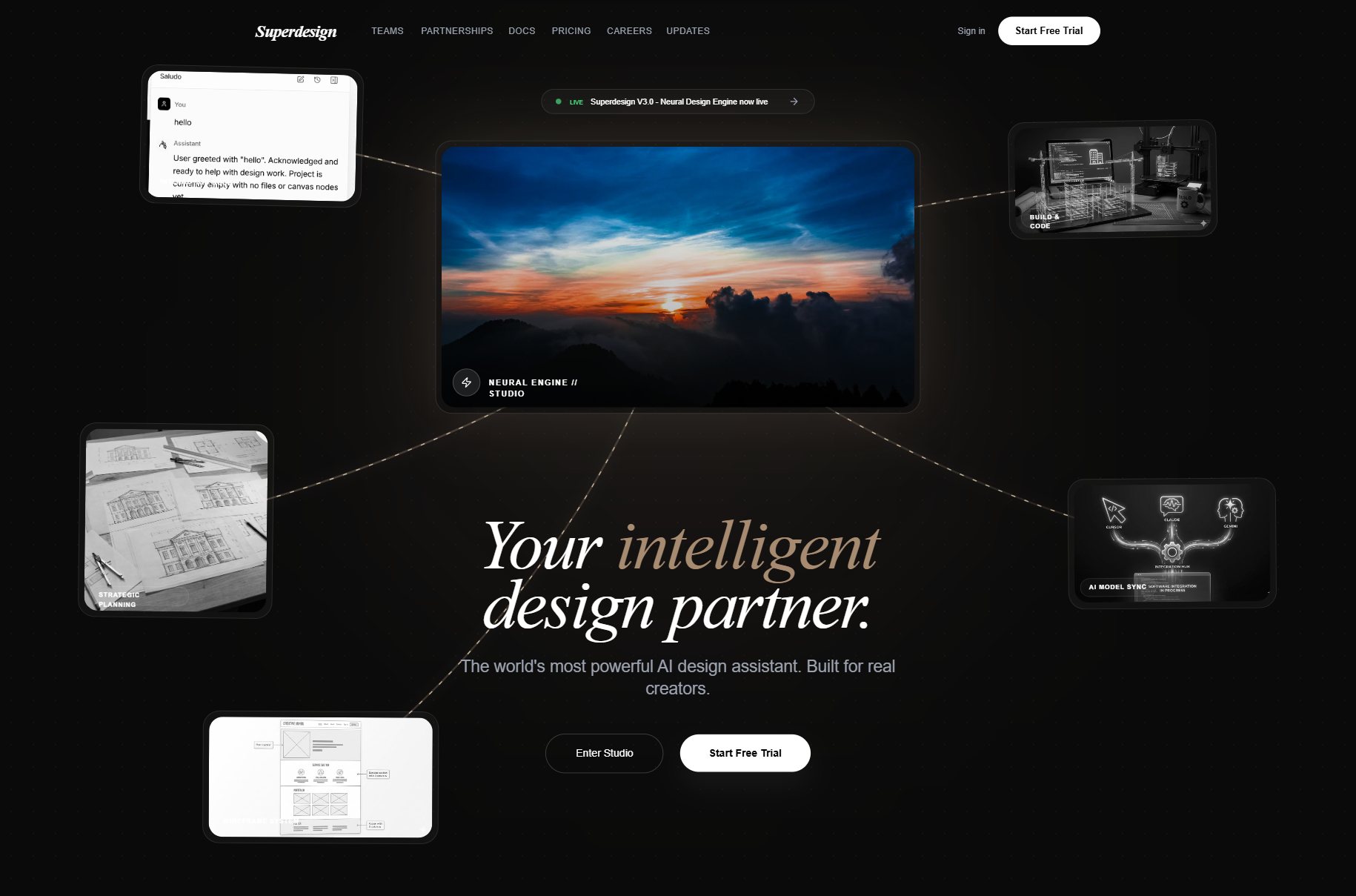
That is the gap the Superdesign skill fills, and where it earns its spot honestly. It is an AI product design agent that runs as a skill inside Claude Code, explores several polished UI directions at once on an infinite canvas, and hands real React and Tailwind back to your agent. The point is not "use Superdesign instead of Claude Code." It is that Claude Code is the engineer and Superdesign supplies the design taste and the reference it lacks. Two parts of it are useful even if you never install it: the free prompt library of proven, copyable design prompts, and the free Chrome Component Grab that turns any live component into clean Tailwind.
npm install -g @superdesign/cli@latest
superdesign login
npx skills add superdesigndev/superdesign-skill
Best skill for testing and verification
A browser-testing skill lets Claude actually look at what it built. Claude Code writes correct code and is a poor judge of its own running app, so the highest-value test skills are the ones that close the loop with real evidence. A Playwright-based webapp-testing skill drives your local app in a real browser and checks behavior across states instead of trusting a single render. For UI specifically, this is the same screenshot-compare-refine habit the design guide leans on, just automated.
For a second kind of verification, add a security pass. Anthropic ships a /security-review command for a Claude-driven checklist, and Trail of Bits' open static-analysis skill pack orchestrates CodeQL and Semgrep across your changes to surface injection risks, auth gaps, and dependency issues before a human reviewer would. It is narrow on purpose, and that is the point: a focused security pass catches a class of bugs that a general "review my code" prompt routinely misses.
Best skill for docs and files
Install the official document skills (pdf, docx, xlsx, pptx) the moment you need Claude to produce or read real files. These ship in the official bundle and use proper libraries under the hood, so xlsx writes real formulas and charts and pptx builds editable slides, not screenshots of slides. If your work touches reports, spreadsheets, or decks, this is a quiet productivity win that has nothing to do with code.
Best skill for git, review, and handoff
Use a dedicated code-review skill plus a handoff skill to manage the parts of the workflow around the code. A good review skill reads the actual diff and flags what a careful human reviewer would, not generic "consider adding comments" noise. A handoff skill compresses a long session into a markdown brief so you can continue in a fresh context window or pass the work to another agent without losing the thread. Long sessions are where Claude Code quietly loses context, and a handoff doc is cheaper than re-explaining a half-finished feature.
The roundup at a glance
| Skill | Job | Install | Where it stops |
|---|---|---|---|
superpowers | Planning, TDD, methodology | /plugin install superpowers@superpowers-marketplace | Cannot fix a vague plan |
frontend-design | Kill the worst UI defaults | official Anthropic marketplace | No taste or reference, only moves off-center |
| Superdesign skill | Design layer: references, parallel UI, real code | npx skills add superdesigndev/superdesign-skill | A design step, not your code engineer |
| webapp testing (Playwright) | Verify the running app | via marketplace | Tests behavior, not whether design is good |
/security-review or ToB static-analysis | Vulnerability scan (CodeQL, Semgrep) | via marketplace | Narrow: security only, not general review |
| document skills | Make and read PDF, DOCX, XLSX, PPTX | official bundle | File output, not code |
skill-creator | Build your own skills | via marketplace | Only as good as the workflow you give it |
How to choose what to install
Start with your single biggest bottleneck, not the longest list. More skills means more tokens loaded and more ways to trigger the wrong one, so a lean stack usually beats a maximal one.
Pick by your actual bottleneck
- ✓Claude rushes into code before understanding: install superpowers
- ✓Your UI looks generic: install frontend-design, then add a real reference layer
- ✓You keep eyeballing the browser to check pages: install a Playwright testing skill
- ✓You ship to production: add security-review for a focused vulnerability pass
- ✓You produce reports or decks: add the document skills
- ✓You repeat the same prompt every session: use skill-creator to capture it
- ✓Long sessions lose context: add a handoff skill
The pattern across all of them: a skill gives Claude a method or a capability, but it does not give Claude judgment about your specific product. That is most obvious in design, which is why the honest stack for UI is a skill for guardrails, a design system for consistency, a real reference for taste, and a verification loop. The deeper version of that argument lives in how to design good UI with Claude Code.
The takeaway
The best Claude Code skills are not a leaderboard, they are a kit you assemble around your own gaps. Get the method right with superpowers, the defaults right with frontend-design, the files and security covered with the official skills, and close the design gap with a real reference layer. Install for the bottleneck in front of you, prune the rest, and you spend tokens on the work instead of on skills you forgot you had. If your gap is specifically getting from a design to working UI, the Figma to Claude Code workflow is the next read.