v0 is genuinely good at one thing users consistently confirm: going from a prompt to a polished, deployable Next.js/React UI fast. The praise is real ("a working MVP delivered and in use by Monday"). The two complaints that dominate the last 12 months of user feedback are (1) the usage-based pricing introduced in May 2025, where heavy users report burning $10 to $30 a day, and paying again when v0 breaks its own code, and (2) reliability regressions reported after the March 2026 update. Worth it for React devs shipping on Vercel who watch their model selection; rough for budget-sensitive iterating.
This page is a compiled review: every opinion below is a verbatim quote from a named user on Hacker News or Vercel's own community forum, with a link. If you came here for a head-to-head, that lives at v0 vs Superdesign; if you already know you want out, the roundup is at v0 alternatives. This page only answers one question: what do real users say about v0, and is it worth it?
| Review facts | |
|---|---|
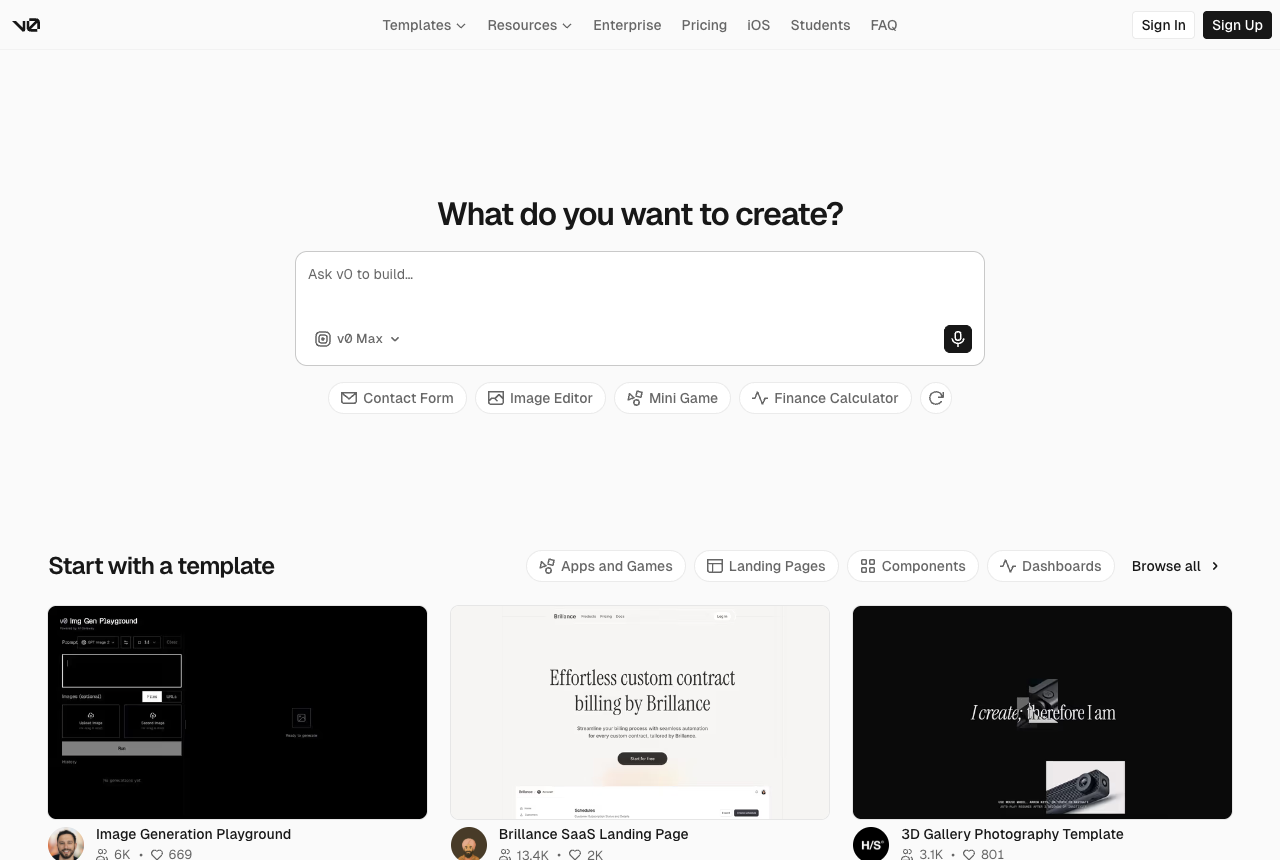
| Product | v0.app, rebranded from v0.dev in August 2025 (Vercel's announcement, which frames it as agentic: "You describe what you want, and it builds.") |
| Maker | Vercel |
| Output stack | React, Next.js, Tailwind, shadcn/ui |
| Pricing model | Subscriptions plus token-based credits |
| Sources reviewed | Hacker News, Vercel Community forum, official pricing page |
| Facts as of | June 13, 2026 |

What do users actually say about v0?
The honest split: users rave about the speed from prompt to deployed app, and the same forums fill up with pricing and reliability pain the longer they use it. Here is the full range, verbatim.
The praise: a working MVP by Monday
The single best account of v0 at its best comes from ryado, an experienced backend engineer who built an internal app for a friend's business in a weekend (Hacker News, September 7, 2025):
"To keep the momentum going, I bypassed the rate limits and spent about $50 on a Pro sub and credits over two days. The result: a working MVP delivered and in use by Monday. The speed was incredible, not just code generation, but the entire dev-to-deploy cycle. v0 instantly solved the "blank canvas" problem for me."
He also compared it to a rival in the same post ("v0 vs. Bolt: v0 felt miles ahead for the initial UI generation.") and ended with the honest founder math: "The sober question now is: was that the best use of $50?"
The best answer to that question came in a reply from amacalac (Hacker News, September 8, 2025):
"$50 to move past your bottleneck? I'd say that's worth a fortune in ROI if you had: a) poor design sense; b) poor design engineering (you have good design sense but can't figure out how to build it); c) taken more than your hourly salary to learn a + b. Agree with understanding if you could do it cheaper and faster next time, but the rule of 3 usually applies: "good, fast and cheap, pick 2" [...]"
Note who is in that list: persona (b) explicitly has good design sense and still gets value. The honest segmentation is not "v0 is for people who can't design." It's that v0 serves people who want the build decision made for them, across taste levels.
The quick wins keep showing up too. From aurareturn (Hacker News, November 18, 2025):
"Just the other day, I used Vercel's v0 to build a small business website for a relative in 10 minutes. It looked fantastic and very mobile friendly."
And on Vercel's own forum, from voltvisionx-2800 (Vercel Community, January 21, 2026):
"I just wanted to tell you that v0 is truly amazing! The AI is better than almost all other AIs I've tried."
Even praise inside the pricing-feedback threads tends to be real, with one telling caveat attached. From djh269-3120 (Vercel Community, June 19, 2025):
"V0 has better deployment options, and the quality is great for what it is. I do think there should be an option to dispute generations in the event they break your codebase to get refunded the credits."
Keep that refund wish in mind. It comes back in every complaint section below.
Mixed: the most instructive review is from a designer who loved it and still quit
dasilvacontin, a technical product designer at Emitwise, wrote the most balanced practitioner write-up in this whole corpus (Vercel Community, April 9, 2025). One thing to know before you read it: this is a churned user. It is a 14-month-old post, and by the time he wrote it he had already stopped using v0; in his own words, "Although I'm currently not using v0 anymore (happy to share more via DM), I wanted to give you some feedback as a thank you". That is exactly why it is valuable: the pros and the dealbreaker sit in one post.
What he liked, verbatim from his list: "Really liked how clean the prototypes came out, with little to no direction needed on the visual side" and "Very easy to get the prototype running on a URL that can be shared widely".
And the dealbreaker, from the same post:
"Working on the same project for 30+ prompts sometimes gets the project on a "broken" state: even though you can see the files in the tree view, the app preview will complain about missing files. If you download a .zip file of the project, those files the app preview complains about missing are indeed missing." [...] "This is a very serious issue that has led me to stop using v0."
A designer who loved the output quality and the shareable URLs quit over project integrity on long sessions. That arc, great at 5 prompts, fragile at 30, is the shape of a lot of v0 feedback.
The pricing pain: the dominant theme since May 2025
When v0 moved from message-based to usage-based pricing in mid-2025 (more on that in the pricing section), Vercel's forum filled with a complaint pattern that has not stopped since. The quotes below run from June 2025 to June 2026, all verbatim.
From emilholm (Vercel Community, June 12, 2025):
"2 days ago I got notified that my included Pro credits ran out - so I decided to pay an additional 30 dollar. And guess what - today that 30 dollars ran out! AFTER 2 DAYS!"
To Vercel's credit, staff respond in these threads: amyegan advised defaulting to smaller models to control burn and saving the large model for hard tasks. emilholm's follow-up in the same thread (post #10, June 15, 2025) replies to exactly that advice:
"Thanks for the advice. However, even on md model, I easily burn through 10-15 dollars a day. Thats simply way too much."
Two months later, the same math from beastcalculators-853 (Vercel Community, August 21, 2025):
"I spent 30$ in a single day just to add a couple of category pages. The new pricing model is insanely worse. We are literally paying for all the good/bad codes that v0 generates, it's terrible."
The most precise accounting in the corpus comes from elliottux in the same thread (August 21, 2025), including a number worth sitting with, the share of his spend that went to fixing v0's own breakage:
"Each iteration is now costing between $0.15 and $0.30 where as previously it was $0.08 and $0.12. I'd say 20% of this was on corrections where v0 broke stuff. If it continues, I hate to say it, but I will have to look at alternatives."
The pricing also lands very differently depending on where you live. From malabawikileaks (Vercel Community, August 22, 2025), who names Lovable as his exit plan later in the same post (we compare the two in v0 vs Lovable):
"In Uganda, a low income country we are really suffering with the v0 pricing model. You burn lots of dollars each day just to fix a page. [...]"
Some long-time fans churned over it outright. From beekrowd (Vercel Community, June 19, 2025):
"After nearly 1 year using and being a huge fan of v0, i decided to cancel the subscription and leave v0. The new way of charging cost is terrible. [...] Fixing a broken version creates several broken versions that cost even more."
Others objected to the switch itself. From develop-8727 (Vercel Community, June 15, 2025):
"I've been using v0.dev for a long time and built multiple projects under the original message-based model. Now, out of nowhere, I'm being shoved into a usage-based pricing structure I never agreed to. [...]"
And the most recent voice, a full year into the new model, captures the love/cost split better than any summary could. From taurusexpress (Vercel Community, June 2, 2026):
"Lately V0 credits are useless, I use to spent the wholde day working in several tasks before my credits end. Now, 5/6 tasks and my credits run out. Unfortunately I'm leaving V0/Vercel, not because the tool is not good ( I love using it) but because its imposible to do anything."
"Not because the tool is not good ( I love using it)." That is the v0 paradox in one parenthesis.
The reliability pain: the March 2026 update
A newer complaint cluster is specific to the update v0 shipped in March 2026. From dk-hello (Vercel Community, March 22, 2026):
"V0 is not usable anymore, it's just producing bugs… And the worst thing is that it is not even listening to the prompts. [...] Last few days I spent over $300 to try to fix a simple parser bug but V0 just won't listen. I have already invested over $2000 to the app and it looks like I should just abandon it because V0 got so much worse."
(The first ellipsis is his; the bracketed one is ours.) In the same thread, luobo1689-5678 piled on, adding in a clause we trimmed that the preview is terrible and keeps hitting connection errors (March 22, 2026):
"I'm right there with you. I'm having the exact same issues. I'm honestly about to give up on the new V0 [...] I get what they were trying to do, but the execution is just a mess"
Two voices in one thread are a signal, not a census. But they rhyme with dasilvacontin's 2025 missing-files report: the recurring failure mode users describe is v0 degrading its own projects, then charging for the repair loop.
The stack lock-in: ask for Svelte, get React
One older complaint is structural rather than a regression, and it is still true today. From _bin_ (Hacker News, March 1, 2025, about 15 months old now, lowercase his):
"i remember someone told me "hey dude try vercel's v0 it's so good" and i asked it for some basic svelte code. it spat out react."
v0 outputs React/Next.js, full stop. If your stack is Svelte, Vue, or anything else, v0 is not opinionated about your stack, it simply has one of its own.
How much does v0 cost?
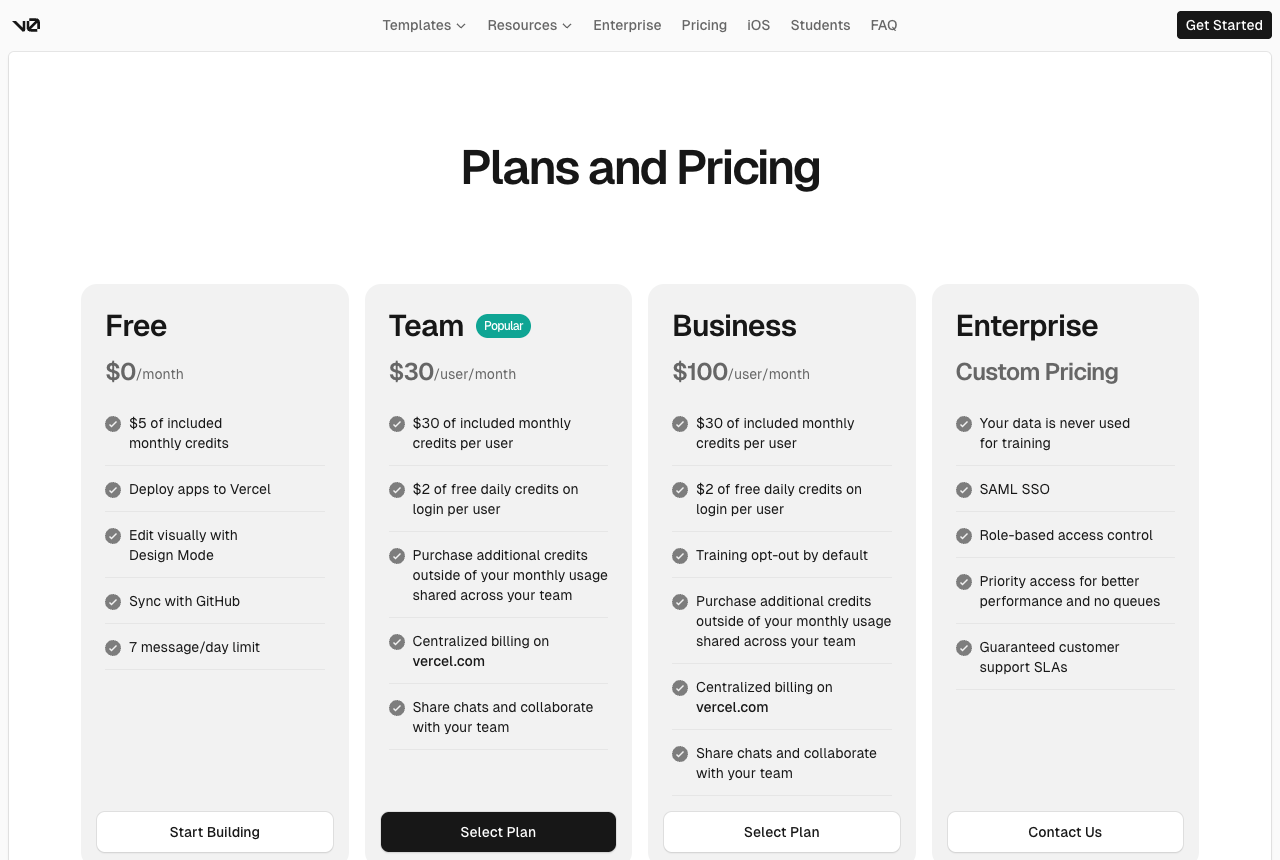
As of June 2026, v0 has no individual paid plan: it is free, $30/user/month for Team, $100/user/month for Business, or custom Enterprise pricing, and every plan burns token-based credits on top. v0 has changed pricing repeatedly, and many of the community quotes above reference older plan names (Pro, Premium, $20/mo) that no longer appear on v0.app/pricing. Here is the current structure, verified June 13, 2026:
- Free: $0, with $5 of included monthly credits, a 7 message/day limit, deploy to Vercel, Design Mode, and GitHub sync.
- Team: $30/user/month, with $30 of included monthly credits per user plus $2 of free daily credits on login per user.
- Business: $100/user/month, same credit structure, training opt-out by default.
- Enterprise: custom pricing (data never used for training, SAML SSO, RBAC).
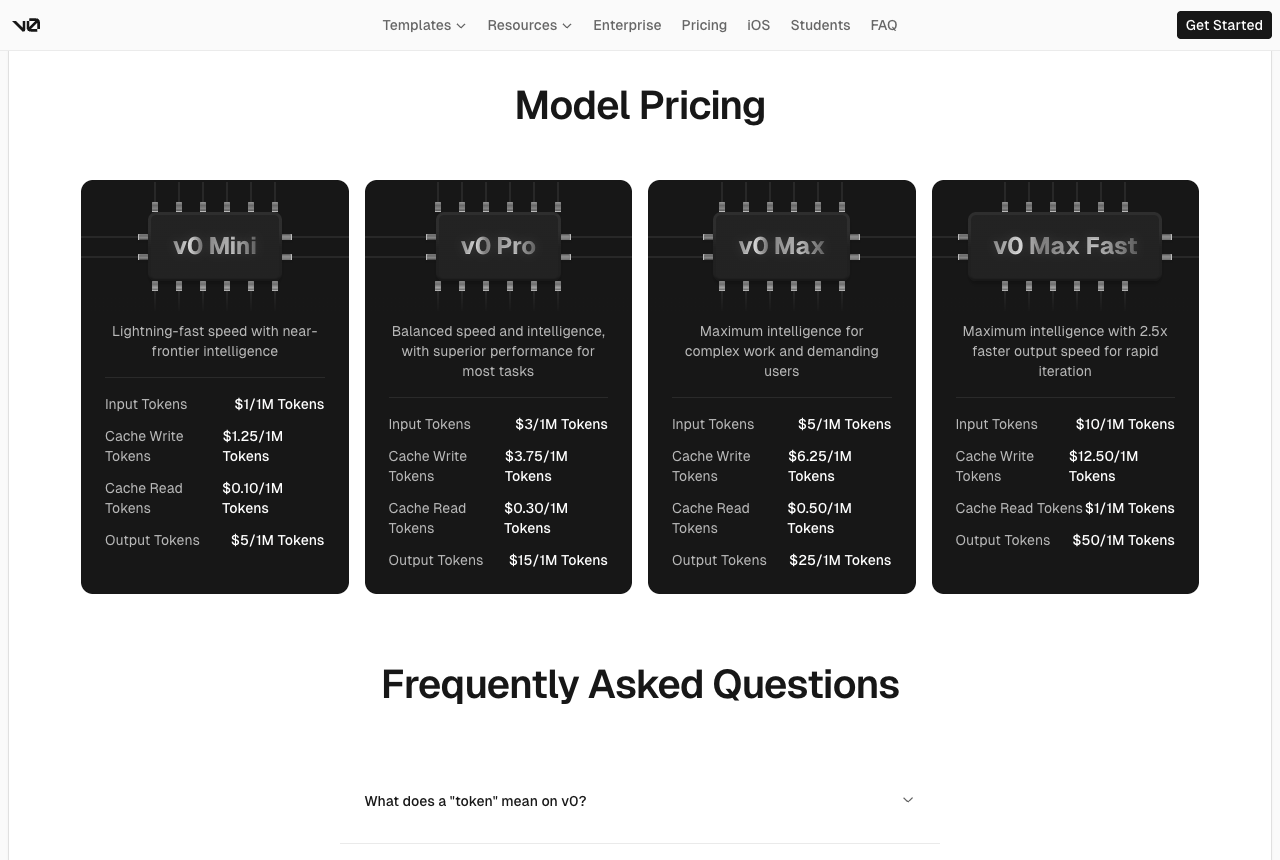
Credits are burned at per-model token rates, and the model picker is the single biggest lever on your bill:
| Model | Input | Output | Cache write | Cache read |
|---|---|---|---|---|
| v0 Mini | $1/1M tokens | $5/1M | $1.25/1M | $0.10/1M |
| v0 Pro | $3/1M | $15/1M | $3.75/1M | $0.30/1M |
| v0 Max | $5/1M | $25/1M | $6.25/1M | $0.50/1M |
| v0 Max Fast | $10/1M | $50/1M | $12.50/1M | $1/1M |
The context for all the anger in the quotes above: v0 moved from message-based to usage-based pricing in May 2025 (Vercel's announcement, May 13, 2025). When the feedback thread on that change passed 150 posts, mleiter, a v0 team member replying in it (his post opens "Hey all, I am on the v0 team at Vercel."), included the line that everything in the pricing-pain section above is reacting to (Vercel Community, May 28, 2025): "we understand your frustration, but I want to let you know we will not be reverting this change."
So the pricing model is settled. The question for you is just whether your usage pattern fits it.
What is v0 good at?
v0's core strength, confirmed across every praise quote above, is collapsing the distance between a prompt and a deployed, polished React app. Specifically:
- 0-to-1 speed. A weekend MVP "delivered and in use by Monday" (ryado), a relative's business site in 10 minutes (aurareturn). The blank canvas problem is the thing v0 most reliably kills.
- The whole pipeline, not just code generation. ryado's praise was "not just code generation, but the entire dev-to-deploy cycle": prompt, preview, deploy to Vercel, share a URL.
- Clean output on its home stack. React, Next.js, Tailwind, and shadcn/ui out of the box, the stack a huge share of new web apps already use.
- Shareable prototypes. Even the churned designer's review praised how easy it was to get "the prototype running on a URL that can be shared widely" (dasilvacontin, with his caveat disclosed above).
- Agentic full-app generation. Since the v0.app rebrand in August 2025, v0 positions itself as an agent that plans and builds whole apps, not just single components: "You describe what you want, and it builds."
The honest frame: v0 makes the build decisions for you, which is exactly what a lot of backend devs and non-frontend folks want. You trade control over the stack and the design direction for speed to something real.
Where does v0 fall short?
Every weakness below is documented in the user quotes above, and they compound into one theme: iteration is where v0 gets expensive and fragile. If several of these match your workflow, the v0 alternatives rundown is the next read.
- Unpredictable spend under token pricing. $10 to $15 a day on a mid-size model (emilholm), $30 in a day for a couple of category pages (beastcalculators-853), credits gone in 5 or 6 tasks (taurusexpress).
- You pay full price to fix v0's own mistakes. elliottux put 20% of his iteration spend on "corrections where v0 broke stuff," and djh269-3120's top feature request was the ability to dispute generations that break your codebase. There are no refunds for failed generations.
- Long sessions degrade projects. The 30+ prompt "broken state" with files missing from the tree and the zip export (dasilvacontin) was bad enough to churn a paying designer who otherwise loved the output.
- The March 2026 update regressions. Not listening to prompts, bug loops, $300 spent on a single parser fix (dk-hello), and a messy preview with connection errors (luobo1689-5678).
- Stack lock-in. Ask for Svelte, get React (_bin_, a 2025 report and a structural limit rather than a regression). If you are not shipping React/Next.js, v0 is the wrong tool, full stop.
Who should use v0 (and who shouldn't)?
v0 is a great fit if you are a React/Next.js developer already on (or happy to be on) Vercel, a backend engineer who wants the UI decided for you, or anyone validating an MVP where $30 to $50 of credits beats a week of frontend work. That is the ryado/amacalac ROI math, and it genuinely holds: $50 for a deployed, in-use MVP by Monday is a fortune in ROI.
It is a poor fit if you are on a non-React stack (you will get React anyway), if you are a budget-sensitive heavy iterator (the per-iteration meter punishes exactly your workflow, including the iterations that fix v0's own breakage), or if you want to explore many design directions before committing to one build. v0 commits to a build on the first prompt, so every "actually, let me try a different direction" is a fresh paid loop. If that last profile is you, the next section is the part of the map you are standing on, and the alternatives roundup covers the rest.
What if your bottleneck is design exploration, not building?
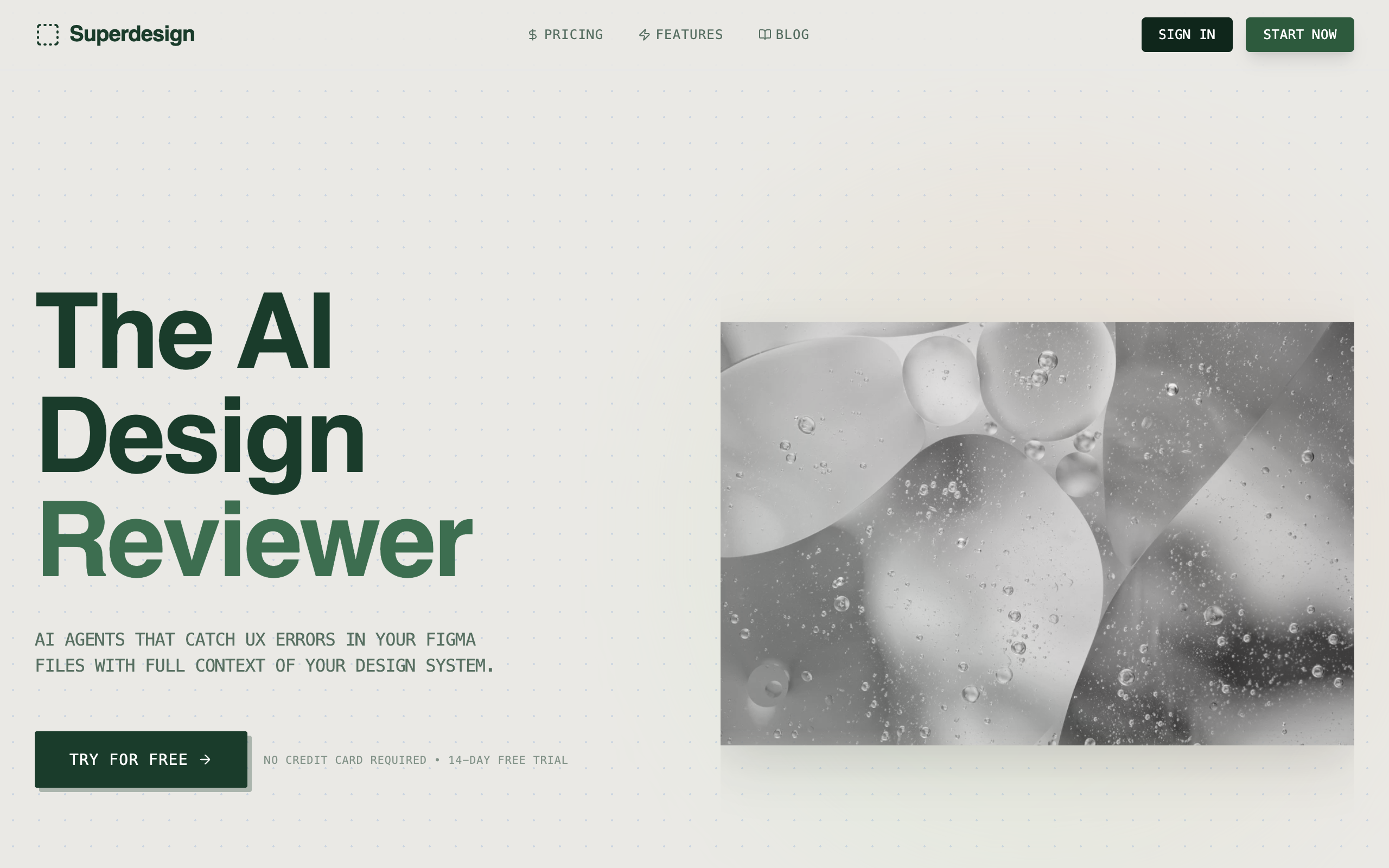
We build Superdesign, so weigh this section accordingly. The honest read of all the feedback above: v0 commits to a build on the first prompt. That is its strength (an MVP by Monday) and its tax, because every redirection afterward is a paid iteration, including the ones that just undo a wrong guess about the design.
Superdesign attacks the step before that. It is a design-first agent on an infinite canvas that generates multiple design directions in parallel, so you compare and refine before any build decision gets made. Instead of re-prompting one linear thread and paying per roll, you fork several directions at once, keep the one with taste, and then build that. It also ships as a skill for Claude Code and Cursor, so the agent you already code with can drive the canvas, and our free prompt library works with any coding agent if you just want better design prompts.
The honest framing: if you want a deployed Next.js app today, v0 is genuinely good at that, and nothing here replaces it. If you keep re-prompting v0 because the design isn't right yet, that exploration loop is what Superdesign is built for. The full head-to-head is in v0 vs Superdesign.
The verdict: is v0 worth it in 2026?
Yes, for the user it was built for, and the users themselves draw the boundary clearly. If you are shipping React on Vercel, you watch your model selection (the official advice in the forums: default to medium or small models, save the big one for hard tasks), and you value prompt-to-deployed-URL speed over design exploration, v0 is worth it. The weekend-MVP stories are real and keep happening.
If you iterate heavily on design, work on a budget, or build outside React, the last 12 months of v0's own forum say you will feel the meter before you feel the magic: $10 to $30 a day reported by heavy users, paid loops to fix the tool's own breakage, regressions reported after the March 2026 update, and a pricing model the team has said, on the record, is not being reverted. Know which user you are before you put a card in.